We have a curated list of the most noteworthy news from all across the globe. With any subscription plan, you get access to exclusive articles that let you stay ahead of the curve.
We have a curated list of the most noteworthy news from all across the globe. With any subscription plan, you get access to exclusive articles that let you stay ahead of the curve.
We have a curated list of the most noteworthy news from all across the globe. With any subscription plan, you get access to exclusive articles that let you stay ahead of the curve.
To become an energy auditor, you typically start with basic education, gain hands-on experience in building systems, earn an industry-recognized certification, and continue developing both technical and communication skills. It’s a practical, future-proof career path that blends sustainability, problem-solving, and real-world impact.
Looking to make a difference in the world—and get paid for it? Becoming an energy auditor might be the career you’ve been searching for. It’s a role that combines real-world problem-solving with sustainability, helping homes and businesses use less energy and save more money.
In this guide, you’ll learn exactly how to become an energy auditor—from education and certification to career paths and expert tips.
What does an energy auditor do, exactly?
Put simply, an energy auditor assesses how buildings use—and often waste—energy. They inspect HVAC systems, lighting, insulation, windows, and appliances, using tools like thermal imaging cameras and blower doors to detect inefficiencies.
Energy auditors help property owners lower utility bills while shrinking their carbon footprint by identifying inefficiencies and recommending practical, cost-saving improvements.
How do you become an energy auditor?
Here’s the straightforward path most people take:
Step 1: Start with education
You’ll need at least a high school diploma or GED. To stand out, many aspiring auditors pursue degrees in mechanical engineering, energy management, environmental science, or building systems. That educational foundation pays off when you move into hands-on work or advanced certifications.
No degree? Don’t panic. Many successful auditors enter the field through trade experience or focused certification programs instead.
Step 2: Get hands-on field experience
Before jumping into energy auditing, many professionals build experience in related roles such as:
HVAC technician
Construction crew member
Building inspector
Apprenticeships or internships are especially valuable. Shadowing a certified auditor or working for a home performance contractor gives you real exposure to diagnostic tools and the inspection process.
Step 3: Earn certification
While certification isn’t always legally required, it’s increasingly expected—especially for government, utility, or commercial work.
Certified Energy Auditor (CEA) – This is a gold-standard credential for commercial and industrial audits.
BPI Home Energy Professional – Energy Auditor – Ideal for residential work and widely recognized by the U.S. Department of Energy.
DOE-recognized certifications – Programs accepted for federal tax credits and incentive projects.
Certification is often the difference between entry-level opportunities and higher-paying, long-term auditing contracts.
Step 4: Build the right skills
Skill Area
Description
Building systems
How HVAC, lighting, insulation, and electrical systems operate
Utility assistance in Huntsville-Decatur-Florence, AL is available through LIHEAP, local Community Action agencies, Salvation Army locations, Huntsville Housing Helps, and emergency nonprofit programs. Eligibility usually depends on income, household size, county of residence, utility status, and available funding.
Huntsville, Decatur, and Florence residents can start by contacting the correct local agency for their county.
Top Utility Assistance Programs in Huntsville-Decatur-Florence, AL
Residents across North Alabama may qualify for utility bill assistance through several programs. The most important starting point is usually the Low-Income Home Energy Assistance Program, commonly called LIHEAP. In Alabama, LIHEAP is administered locally by Community Action agencies.
The Huntsville-Decatur-Florence region crosses multiple counties, so the right agency depends on where you live. Madison and Limestone County residents generally work with Community Action Partnership Huntsville/Madison & Limestone Counties. Morgan, Lawrence, and nearby Decatur-area residents generally work with Community Action Partnership of North Alabama. Florence and Lauderdale County residents should check local bill assistance resources and the Community Action agency serving Lauderdale County.
Other support may be available from The Salvation Army, Huntsville Assistance Program, Huntsville Housing Helps, local churches, and utility-company payment assistance resources. Funding changes often, so residents should apply early and confirm current intake rules before visiting an office.
North Alabama Utility Assistance Contact Table
Use this table to identify the best starting point based on your service area. Always call or check the agency website first because appointment systems, funding windows, and document requirements can change.
Program or Agency
Service Area
What It May Help With
Official URL
Community Action Partnership Huntsville/Madison & Limestone Counties
Madison and Limestone Counties
LIHEAP heating and cooling assistance for eligible households.
Utility assistance rules vary by city, county, provider, and funding source.
LIHEAP Utility Assistance in Huntsville, Decatur, and Florence
LIHEAP is a federally funded program that helps eligible low-income households with home energy bills. In Alabama, applicants typically apply through the Community Action agency assigned to their county.
In the Huntsville Utilities service area, LIHEAP is administered by Community Action Partnership Huntsville/Madison & Limestone Counties. In the Decatur area, Decatur Utilities directs customers to Community Action Partnership of North Alabama for LIHEAP and related assistance. Florence residents should use the city’s bill assistance resources to identify current Lauderdale County LIHEAP contacts.
Heating Help
LIHEAP may help with winter heating bills during the heating season when funds are available.
Cooling Help
Eligible households may receive cooling assistance during Alabama’s hot-weather season.
Priority Households
Agencies may prioritize seniors, people with disabilities, families with young children, and households facing shutoff.
Limited Funding
Appointments can fill quickly, and assistance depends on eligibility, documentation, and available funds.
Need Help With a Utility Bill?
Gather your utility bill, ID, proof of income, and shutoff notice if you have one. Then contact the correct agency for your county.
Salvation Army Utility Assistance in North Alabama
The Salvation Army may provide emergency rent, mortgage, and utility assistance when local funding is available. Assistance is typically based on financial hardship, household need, location, and documentation.
Residents can start with SAHelp.org by entering their ZIP code to locate nearby Salvation Army services. Florence-area residents may also contact The Salvation Army of the Shoals for local service information.
Practical tip: Emergency assistance is often first-come, first-served. Call early in the week, ask what documents are required, and keep copies of every bill, notice, and application confirmation.
Emergency utility help can protect households from shutoff while they work toward longer-term stability.
Documents Needed for Utility Assistance Applications
Most Huntsville-Decatur-Florence utility assistance programs require proof of identity, residence, income, and utility responsibility. Requirements vary, but preparing these documents can prevent delays.
Photo ID
Bring a valid ID for the applicant and any other identity documents requested by the agency.
Utility Bill
Provide your most recent electric, gas, water, or heating bill showing account number and balance.
Income Proof
Agencies may ask for pay stubs, benefit letters, unemployment records, or other household income documents.
Shutoff Notice
If you have a disconnection notice, include it with your application to document urgency.
How to Maximize Utility Assistance Benefits
Utility assistance works best when paired with energy-saving habits, payment communication, and follow-up. As a homeowner, ask about weatherization if high bills are tied to insulation, air leaks, or inefficient heating and cooling. As a renter, ask your landlord about repairs that may reduce energy waste. As a business owner, contact your utility provider about payment arrangements before a bill becomes past due.
Apply Early
Do not wait until disconnection. Appointment calendars and funding can run out quickly.
Ask for Payment Plans
Contact your utility provider to ask about deferred payment options or budget billing.
Track Every Contact
Write down dates, names, phone numbers, confirmation numbers, and documents submitted.
Cut Energy Waste
Use thermostat adjustments, weatherstripping, LED bulbs, and appliance checks to lower future bills.
Quick Summary: Huntsville-Decatur-Florence Utility Help
Need
Best Starting Point
Heating or cooling bill assistance
LIHEAP through your county Community Action agency
Huntsville or Madison County emergency help
Huntsville Assistance Program or Community Action Partnership Huntsville/Madison & Limestone Counties
Decatur or Morgan County assistance
Community Action Partnership of North Alabama
Florence or Shoals-area help
Florence bill assistance resources or The Salvation Army of the Shoals
Rental and utility hardship in Huntsville city limits
Huntsville Housing Helps, when active and funded
Long-term bill reduction
Weatherization, energy conservation, and utility payment plans
Watch: Huntsville Housing Helps Rental and Utility Assistance
This local news segment explains Huntsville’s investment in rental and utility assistance for residents facing housing-related hardship.
Frequently Analyzed Topics
Who qualifies for LIHEAP in Huntsville-Decatur-Florence?
Eligibility is based on household income, household size, county of residence, energy burden, and program funding. Some agencies may prioritize seniors, people with disabilities, families with young children, or households facing disconnection.
Where do Huntsville residents apply for utility assistance?
Madison and Limestone County residents generally start with Community Action Partnership Huntsville/Madison & Limestone Counties for LIHEAP. Huntsville residents may also check Huntsville Assistance Program, Huntsville Housing Helps, and local nonprofit resources.
Where do Decatur residents apply for utility assistance?
Decatur and Morgan County residents generally start with Community Action Partnership of North Alabama. Decatur Utilities also directs customers to CAPNA for LIHEAP and related assistance programs.
Can The Salvation Army help with utility bills in Alabama?
Yes, The Salvation Army may help with utility, rent, mortgage, and emergency basic-needs assistance when local funding is available. Use SAHelp.org or contact your nearest Salvation Army location for current eligibility and intake rules.
What if my utility service is about to be disconnected?
Contact your utility provider immediately and ask about payment arrangements. Then contact your local Community Action agency, The Salvation Army, and emergency assistance nonprofits. Keep your shutoff notice and account number ready.
Next Steps for Utility Assistance in North Alabama
If you are struggling with a utility bill, start by identifying your county and utility provider. Then contact the appropriate Community Action agency for LIHEAP and ask whether heating, cooling, crisis, or weatherization assistance is available.
You should also contact your utility company before the due date, ask about payment plans, and request information about any local hardship funds. If you are in Huntsville, Decatur, Florence, or the Shoals, nonprofit agencies may be able to help if LIHEAP appointments are unavailable.
Access Utility Assistance in Huntsville-Decatur Today
Do not wait until your service is disconnected. Utility assistance is easier to request when you still have time to gather documents, schedule appointments, and contact your provider.
Find the correct Community Action agency for your county
Gather your utility bill, ID, income proof, and shutoff notice
Ask your utility provider about payment arrangements
Check Salvation Army and nonprofit emergency assistance
What Are the Top Utility Assistance Programs in Aurora IL?
Utility Assistance Programs in Aurora IL include the federal LIHEAP administered by Community Contacts Inc. for Kane County residents from their Aurora office at 1700 N. Farnsworth Ave., Suite 13, (847) 697-4400, plus DuPage, Kendall, and Will County offices for other Aurora residents. The state’s new Low Income Discount Rates (LIDs) provide automatic monthly discounts for income-eligible Nicor Gas, Peoples Gas, North Shore Gas, Ameren Illinois, and (starting January 2026) ComEd customers. ComEd’s Residential Special Hardship grants, the Nicor Gas Sharing Program, and Aurora Township General Assistance round out the local network. Apply Oct 1, 2025 – Aug 15, 2026 through your county provider.
Why Utility Assistance Programs in Aurora IL Matter in 2026
Aurora is Illinois’s second-largest city and spans four counties, complicating utility assistance access.
Aurora is Illinois’s second-largest city, home to over 180,000 residents across four counties: Kane, DuPage, Kendall, and Will. That multi-county footprint creates a unique challenge for residents seeking utility assistance because the agency that administers LIHEAP in Aurora depends on which county you live in. The good news is that Aurora has one of the more robust utility assistance ecosystems in suburban Chicago, with federal LIHEAP, state Low Income Discount Rates, utility-funded hardship programs, and local Township General Assistance all available to qualified households.
This guide walks through every utility assistance program available to Aurora residents in the 2025-2026 program year, who qualifies, the verified contacts for each agency by county, and exactly how to apply. As an Aurora household, the smart move is to identify your county first, then call your designated LIHEAP provider to get screened for every program at once.
Key Utility Assistance Programs in Aurora IL at a Glance
LIHEAP
The federal Low Income Home Energy Assistance Program. Aurora Kane County residents apply through Community Contacts Inc.; DuPage, Kendall, and Will residents apply through their respective county offices.
Community Contacts Inc.
Community Contacts Inc. is the Kane and DeKalb County Community Action Agency. Aurora office at 1700 N. Farnsworth Ave., Suite 13. Phone: (847) 697-4400 for LIHEAP, (847) 697-8800 for weatherization.
ComEd’s Residential Special Hardship program provides one-time grants to qualifying customers facing hardship, particularly for medical, disability, or temporary income loss situations.
Nicor Gas Sharing
Nicor Gas Sharing Program provides one-time annual grants ($400-$450, varying by age) for qualified Nicor Gas residential customers. Funded by customer and corporate donations.
Help Illinois Families
The state’s centralized LIHEAP application portal at helpillinoisfamilies.com, plus call center at 1-833-711-0374. The single best starting point if you’re unsure which county provider serves you.
Finding Your County’s Provider for Utility Assistance Programs in Aurora IL
Aurora is split across Kane (primary), DuPage, Kendall, and Will counties. Your application must go to the LIHEAP provider for the county where you actually live. Sending your application to the wrong agency delays processing by weeks.
Kane County (Most of Aurora)
Most Aurora residents live in Kane County. Community Contacts Inc. is the designated LIHEAP and weatherization provider. Their Aurora office is at 1700 N. Farnsworth Ave., Suite 13, Aurora, IL 60505, with the main office at 100 S. Hawthorne St., Elgin, IL 60123. Call (847) 697-4400 for LIHEAP or (847) 697-8800 for weatherization and housing rehabilitation. Online applications are now available for Kane and DeKalb County residents through cci-hci.org.
DuPage County
Aurora residents in DuPage County apply through DuPage County Community Services at 421 N. County Farm Road, Wheaton, IL 60187, phone (630) 407-6500 or 1-800-942-9412. Office hours are Monday through Friday, 8 a.m. to 4 p.m.
Kendall County
Aurora residents in Kendall County apply through Kendall County’s designated LIHEAP office at 811 John Street, Yorkville, IL 60560, phone (630) 553-9100.
Will County
Aurora residents in Will County apply through the Will County office at 304 N. Scott Street, Joliet, IL 60432, phone (815) 722-0722.
Not sure which county you live in?
Call the Help Illinois Families Call Center at 1-833-711-0374 or visit helpillinoisfamilies.com. The state will route you to the right county provider based on your address. Alternatively, dial 2-1-1 from any phone in Illinois to reach the statewide referral service.
Aug 15
2026 LIHEAP Application Deadline
The 2025-2026 Illinois LIHEAP application window runs from October 1, 2025 through August 15, 2026, or until funds are exhausted. Applications are accepted first-come, first-served, with priority for seniors, disabled individuals, families with young children, and households facing disconnection.
Eligibility for Utility Assistance Programs in Aurora IL
LIHEAP uses 60% State Median Income; renters with utilities included in rent may still qualify.
Illinois LIHEAP uses 60% of State Median Income as the threshold for eligibility, which is more generous than the federal 200% Federal Poverty Level standard used in many states. Income is calculated based on gross monthly income for the 30 days prior to application.
Income guidelines for the 2026 program year
If your household’s combined income for the 30 days prior to application (gross income, before taxes) is at or below 60% of State Median Income, you may be eligible for LIHEAP assistance. Income thresholds are updated each program year based on state and federal data. For a four-person household, this typically falls in the range of $5,000-$5,500 gross monthly income, but the exact figure changes annually. Call your county agency for current-year specifics.
Automatic categorical eligibility
You are automatically qualified for LIHEAP assistance if you participate in:
SNAP (Supplemental Nutrition Assistance Program / food stamps)
TANF (Temporary Assistance for Needy Families)
SSI through Social Security
Priority groups
The 2025-2026 program year designated October as a priority application period. To qualify in October, your household must contain at least one of:
A person age 60 or over
A person age 5 or under
A person receiving federal disability income
An active disconnection notice from your utility
Less than 25% in your propane tank
All other income-eligible households became eligible to apply starting November 1, 2025.
Renters with utilities in rent
Critically, if you rent and your heat is included in the rent, you may still be eligible for a LIHEAP benefit. Many Aurora renters miss this provision and don’t apply when they actually qualify.
Comparing the Top Utility Assistance Programs in Aurora IL
Program
Who Qualifies
Benefit
LIHEAP (DVP)
Up to 60% State Median Income
One-time direct utility credit, varies by usage
LIDs (Discount Rates)
LIHEAP-eligible Nicor, Peoples, North Shore, Ameren customers (ComEd 1/1/2026)
Automatic monthly bill discount
ComEd CARE
Hardship qualifying customers
Residential Special Hardship grant (one-time)
Nicor Gas Sharing
Income-qualified Nicor Gas customers
$400-$450 one-time annual grant
Township General Assistance
Aurora Township residents in financial hardship
Local emergency aid; amounts vary
Author’s Pro Tip
Don’t skip the new Low Income Discount Rates. Most Aurora households fixate on LIHEAP and never realize that Illinois’s new LIDs program delivers ongoing monthly discounts on their gas bill (and ComEd electric, starting January 1, 2026) automatically once they’re LIHEAP-approved. The combination of a one-time LIHEAP credit plus 9-12 months of LID discounts often exceeds $1,500 in annual savings. As an Aurora Kane County resident, the right sequence is: (1) apply for LIHEAP through Community Contacts Inc. at (847) 697-4400, (2) when approved, LIDs are automatically applied through your utility, (3) ask about Nicor Sharing or ComEd Hardship for any remaining gap, (4) if you’re in Aurora Township specifically, ask about Township General Assistance for emergency situations.
— Editorial Team, UtilityAssistanceOnline
Facing a Disconnect Notice in Aurora?
LIHEAP applications with active disconnection notices receive emergency reconnection processing through Community Contacts. Call (847) 697-4400 immediately.
How to Apply for Utility Assistance Programs in Aurora IL
Community Contacts Inc. now offers online applications for Kane County Aurora residents.
Step 1: Determine your county and provider
Confirm whether your Aurora address is in Kane, DuPage, Kendall, or Will County. Use the helpillinoisfamilies.com lookup tool or call 1-833-711-0374. Most Aurora residents are in Kane County and will apply through Community Contacts Inc.
Step 2: Choose your application channel
Kane County Aurora residents now have multiple application options through Community Contacts Inc.: apply online at cci-hci.org, call (847) 697-4400 to schedule an in-person appointment at the Aurora office (1700 N. Farnsworth Ave., Suite 13), or visit www.liheap.as.me when scheduling is available. DuPage residents apply through (630) 407-6500. Online applications are increasingly the fastest channel.
Step 3: Gather required documentation
Proof of 30-day income through pay stubs, checks, or copy of checks for all household members
Social Security cards, ITINs, or other immigration documents for each household member
Current heating bill (gas, electric, propane, oil) with account number
Current electric bill
Photo ID for head of household
If renting: copy of lease showing whether heat is included
If categorically eligible: SNAP, TANF, or SSI award letter
Step 4: Submit and track your application
After submission, Community Contacts staff enter your application and follow up by phone or email if additional documentation is needed. Applications take approximately 30 days to process on average. You’ll receive a letter in the mail in about 45 days after your application is entered. Once you have a seven-digit Application ID (starting with a 7), check status at liheap2025.ilenergyassistance.com/customerinquiry or call 1-833-711-0374.
Step 5: Notify your utility
Community Contacts recommends notifying your utility that you’ve applied for LIHEAP and trying to set up a payment plan. If you receive a disconnect notice while waiting, call Community Contacts immediately so your application can be processed as emergency reconnection assistance. Benefit payments to the utility can take up to 90 days to fully complete, but the LIHEAP pledge protects you during processing.
Beyond LIHEAP: Other Utility Assistance Programs in Aurora IL
Several adjacent programs work alongside LIHEAP to ease the broader cost pressure that pushes Aurora households into utility hardship.
Illinois Home Weatherization Assistance Program
Community Contacts Inc. also administers the Illinois Home Weatherization Assistance Program for Kane and DeKalb County residents. Designed to help eligible households conserve energy and save money while increasing home comfort, the program provides free insulation, air sealing, HVAC tune-ups, and other measures. Apply through (847) 697-8800. For broader context, see our companion guide on weatherization assistance programs in Aurora IL.
Aurora Township General Assistance
Aurora Township provides General Assistance to township residents facing financial hardship, including help with utility bills, emergency rent, and other essential needs. Note that Aurora is divided among multiple townships, so contact Aurora Township first to confirm your residence falls within their service area. Township General Assistance is typically a last-resort emergency program after LIHEAP and other federal options are exhausted.
Two Rivers Head Start Agency
Located at 1661 Landmark Road, Aurora, IL 60506, phone (630) 264-1444, Two Rivers Head Start is a Kane County Community Action Agency that can connect Aurora families with additional support services beyond LIHEAP, including childcare, food assistance, and family case management. Hours: 8:30 a.m. to 4 p.m. Monday through Wednesday, until 5 p.m. Thursday, and 3 p.m. on Friday.
211 Helpline
Dialing 2-1-1 from any Illinois phone connects you with trained specialists who provide information on every utility assistance program in your area and direct you to local organizations. The service is free, confidential, multilingual, and operates 24/7. For broader strategies on household resilience, see our companion guides on Chicago weatherization programs, mastering your utility bills, and how weatherization works.
Frequently Asked Questions About Utility Assistance Programs in Aurora IL
Who qualifies for Utility Assistance Programs in Aurora IL?
Households with combined 30-day income at or below 60% of Illinois State Median Income qualify for LIHEAP. SNAP, TANF, and SSI recipients are automatically categorically eligible. Both homeowners and renters can apply. Critically, renters whose heat is included in their rent may still qualify for a LIHEAP benefit.
Where do I apply if I live in Aurora?
It depends on your county. Kane County Aurora residents apply through Community Contacts Inc. at 1700 N. Farnsworth Ave., Suite 13, phone (847) 697-4400. DuPage County residents call (630) 407-6500. Kendall County: (630) 553-9100. Will County: (815) 722-0722. If unsure, call the Help Illinois Families Call Center at 1-833-711-0374.
How long does the application process take?
Applications take approximately 30 days to process on average. You’ll receive a letter in the mail in about 45 days after your application is entered. The full payment to your utility can take up to 90 days, but the LIHEAP pledge protects you from disconnection during processing.
What are the new Low Income Discount Rates?
Low Income Discount Rates (LIDs) are a new Illinois program providing automatic monthly bill discounts to income-eligible customers of Ameren Illinois, Nicor Gas, North Shore Gas, and Peoples Gas. ComEd electric customers will receive LIDs starting January 1, 2026. Households that qualify for LIHEAP are automatically enrolled in LIDs through their utility, providing 9 to 12 months of ongoing discounts in addition to the one-time LIHEAP credit.
What happens if I miss my application month?
Don’t worry. While October was the priority application month for the 2025-2026 program year (for seniors, disabled individuals, families with young children, and disconnection cases), all other income-eligible households became eligible starting November 1, 2025. The full application window runs through August 15, 2026, or until funds are exhausted. Apply as early as possible because funds are first-come, first-served.
Can I apply for weatherization through the same agency?
Yes. For Kane County Aurora residents, Community Contacts Inc. administers both LIHEAP and the Illinois Home Weatherization Assistance Program through the same office. Call (847) 697-8800 for weatherization and housing rehabilitation, separate from the LIHEAP intake line. Weatherization provides free insulation, air sealing, and HVAC improvements at no cost to qualified households.
Apply for Utility Assistance Programs in Aurora IL Today
What Are Weatherization Assistance Programs in Aurora, IL?
Weatherization Assistance Programs in Aurora, IL are state and federally funded initiatives that provide free home energy efficiency upgrades to income-qualified Kane County residents. The main program is the Illinois Home Weatherization Assistance Program (IHWAP), administered by the Illinois Department of Commerce and Economic Opportunity (DCEO) and delivered locally by Community Contacts, Inc. (CCI). Eligible renters and homeowners earning up to 200% of the Federal Poverty Level can receive up to $15,000 in energy-related weatherization plus an additional $3,500 in health and safety upgrades per home. Apply through CCI’s Aurora office at 847-697-4400.
Why Weatherization Assistance Programs in Aurora, IL Matter in 2026
Aurora families across Kane County can access free home energy upgrades through CCI.
Aurora winters can be brutal and summers increasingly hot, and for low- to middle-income families in Kane County, those temperature swings translate into utility bills that swallow a disproportionate share of the household budget. Weatherization Assistance Programs in Aurora, IL exist specifically to break that cycle, making homes more energy-efficient at no cost to qualifying residents while delivering real safety improvements along the way.
What makes Aurora weatherization assistance especially powerful is that it isn’t a rebate or partial-cost program. It is a full home efficiency overhaul. As an Aurora resident squeezed by rising utility rates and inflation, you can receive up to $15,000 in energy-related work plus $3,500 in health and safety measures, totaling as much as $18,500 of free improvements per qualified home. Far too few eligible households apply, simply because they don’t know the program exists or assume the income thresholds are stricter than they actually are.
Key Entities Behind Weatherization Assistance Programs in Aurora, IL
Community Contacts, Inc.
Community Contacts, Inc. (CCI) is the designated Community Action Agency that delivers weatherization and LIHEAP for Kane and DeKalb counties. Aurora office: 1700 N. Farnsworth Ave., Suite 13.
IHWAP
The Illinois Home Weatherization Assistance Program is the state-level program funded by the U.S. Department of Energy and LIHEAP, administered statewide by DCEO and delivered in Aurora by CCI.
DCEO
The Illinois Department of Commerce and Economic Opportunity oversees IHWAP statewide and routes federal funding through CCI and other Community Action Agencies.
LIHEAP
The federal Low Income Home Energy Assistance Program contributes funding alongside DOE WAP dollars. LIHEAP-approved households are typically automatically WAP-eligible.
UECP
The Utility Energy Conservation Program is CCI’s second weatherization track for moderate-income households who fall above IHWAP’s income cap. Worth asking about if your income disqualifies you from IHWAP.
Ameren Illinois CAA Channel
Ameren Illinois funds additional weatherization incentives through its Community Action Agency Channel, supplementing CCI’s IHWAP work for Ameren customers in the Aurora service territory.
What Weatherization Assistance Programs in Aurora, IL Actually Cover
CCI’s weatherization is comprehensive. It starts with a full home energy audit and ends with crews of licensed contractors installing upgrades at no cost to the household. The Illinois Department of Commerce and Economic Opportunity reports that customers who completed weatherization measures saw average statewide energy savings of up to 25% based on post-installation evaluations.
Energy audits
It all starts with a thorough energy audit of your home. Experts check your energy use, pinpoint areas that need work, and generate a tailored work order with specific weatherization solutions. This is the same diagnostic step used statewide, so your home gets the same level of technical attention regardless of which Community Action Agency administers it.
Insulation and air sealing
Insulation keeps your home cozy in winter and cool in summer. CCI installs insulation in attics, walls, floors, basements, and ductwork as the audit indicates. Air sealing eliminates drafts and unwanted air leaks. For most Aurora homeowners, especially those in older Fox Valley housing stock, this is where the largest savings come from.
Heating and cooling upgrades
Your heating and cooling systems may also receive attention. IHWAP can cover heating system inspection, cleaning and tuning, repair, retrofit, or in some cases full replacement of the furnace. Energy-efficient HVAC upgrades round out the package and dramatically lower long-term utility costs.
Health and safety measures
Every home receives safety checks including verification of working smoke detectors and carbon monoxide detectors. Up to $3,500 per home is available for health and safety upgrades on top of the standard energy-related work.
$18,500
Maximum Aurora WAP Investment Per Home
IHWAP can spend up to $15,000 on energy-related weatherization plus an additional $3,500 on health and safety measures per qualified Aurora home. All work is installed by licensed contractors free of charge.
Eligibility for Weatherization Assistance Programs in Aurora, IL
To qualify for Weatherization Assistance Programs in Aurora, IL, your household must reside in Kane County (Aurora and surrounding municipalities) and meet income guidelines. As a working family, the income threshold is more generous than people typically expect. Households earning up to 200% of the Federal Poverty Level, or 60% of the State Median Income (whichever is greater), qualify for IHWAP.
Automatic eligibility
You are automatically WAP-eligible if:
You received LIHEAP assistance in the last 12 months
A household member receives Supplemental Security Income (SSI)
A household member receives Aid to Aged, Blind, and Disabled (AABD)
A household member receives Temporary Assistance for Needy Families (TANF)
15-year rule and dwelling requirements
To qualify for weatherization, your home must not have received WAP services in the last 15 years. The program serves single-family homes, multi-family buildings, and apartment units that meet minimum structural requirements. Both renters and homeowners can apply, though for rental units, landlord cooperation is required.
Priority groups
Per DCEO regulations, CCI prioritizes households containing elderly members (60 and over), members with a disabling condition, or young children. Non-priority eligible households are served as funding allows.
Weatherization Assistance Programs in Aurora, IL vs. Related Energy Programs
Program
Who Qualifies
What’s Covered
IHWAP (Weatherization)
Kane County residents up to 200% FPL
Up to $15,000 energy + $3,500 health/safety
LIHEAP (Heating)
Low-income households (CCI processes)
One-time payment toward heating/cooling bills
UECP (Utility Energy Conservation)
Moderate-income above IHWAP cap
Insulation, air sealing, weatherization upgrades
Multi-Family IHWAP
Landlords with income-eligible tenants
Building-wide weatherization upgrades
Author’s Pro Tip
Apply for LIHEAP through CCI first. LIHEAP approval automatically qualifies you for IHWAP weatherization and skips the income re-verification step. Most Aurora households that maximize their benefit start with the LIHEAP application, then ask CCI to roll their case directly into the weatherization queue. One application unlocks both programs, plus screens you for the Multi-Family IHWAP if you live in a qualifying building. CCI’s number is 847-697-4400 for LIHEAP and 847-697-8800 for weatherization-specific questions.
— Editorial Team, UtilityAssistanceOnline
Ready to Cut Your Aurora Utility Bills for Good?
Free weatherization upgrades worth up to $18,500 are sitting on the table for income-qualified Kane County households. Check your eligibility in under two minutes.
How to Apply for Weatherization Assistance Programs in Aurora, IL
Applications go through Community Contacts, Inc., not directly through the state.
Step 1: Contact Community Contacts, Inc.
Reach out to CCI through one of three channels. Call the Aurora office at 847-697-4400, complete the online Weatherization Interest Form at cci-hci.org, or visit the Aurora location at 1700 N. Farnsworth Ave., Suite 13, Aurora, IL 60505 during business hours (8:00 AM to 4:30 PM weekdays).
Step 2: Gather your documentation
To complete your application, you’ll need:
Proof of gross income from all household members for the 30-day period prior to application
Current heat and electric bills with rates, meter readings, and account information
Social Security numbers for all household members
Photo ID for head of household
If applicable: LIHEAP approval letter, SSI/AABD/TANF award letter, or current participation documentation
If renting: rental agreement and landlord contact information (required for renter applications)
Step 3: Wait for the home energy audit
Once CCI determines your household is eligible, they schedule a trained agency staff member to assess your home and conduct an energy audit (survey) that determines what work can be done to save the most energy. This audit drives the work order for your entire weatherization project.
Step 4: Installation by licensed contractors
All weatherization measures are installed by licensed contractors at no cost to you. CCI’s team coordinates the work, and every job is inspected to make sure the work is complete and correct before being closed out. As a busy household, you don’t need to manage the contractors yourself. CCI handles that.
Benefits of Weatherization Assistance Programs in Aurora, IL
Participating in weatherization assistance programs in Aurora delivers durable, compounding benefits for low- to middle-income families. The savings don’t end the day the crew leaves. They compound year after year as your home runs more efficiently through every Aurora winter and summer.
Lower utility bills
Weatherization supercharges your home’s energy efficiency, reducing energy consumption and lowering your utility bills. Statewide, IHWAP recipients see average annual savings of up to 25% on energy costs. As a household stretching every dollar, that’s the most immediate and measurable benefit.
Year-round comfort
Weatherization eliminates drafts, regulates indoor temperatures, and creates a more comfortable living space. For Aurora households dealing with older Fox Valley housing stock, this often delivers immediate same-day improvement once air sealing and insulation are complete. Combined with a solid HERS energy rating, your home becomes both more comfortable and more valuable.
Greener footprint
By weatherizing, you reduce overall energy consumption and lower your household’s greenhouse gas emissions. The environmental benefits compound across the program: weatherization is one of the most cost-effective climate interventions per dollar invested. For broader context, see our companion guides on national weatherization assistance programs and the Chicago-specific weatherization landscape for nearby Cook County residents.
Frequently Asked Questions About Weatherization Assistance Programs in Aurora, IL
Who qualifies for Weatherization Assistance Programs in Aurora, IL?
Kane County (Aurora-area) residents with household income at or below 200% of the Federal Poverty Level qualify for IHWAP. Both renters and homeowners can apply. You’re automatically eligible if you received LIHEAP in the last 12 months or if a household member receives SSI, AABD, or TANF. Priority goes to households with members aged 60+, members with disabilities, or young children.
How much can the Aurora IHWAP program spend on my home?
A maximum of $15,000 can be spent on each eligible client’s home for energy-related weatherization and repair work, plus an additional $3,500 for health and safety related measures. Total potential per-home investment is up to $18,500 at no cost to the household.
How do I contact Community Contacts, Inc. in Aurora?
CCI’s Aurora office is at 1700 N. Farnsworth Ave., Suite 13, Aurora, IL 60505. Call 847-697-4400 for LIHEAP and general weatherization intake, or 847-697-8800 for weatherization-specific questions. Office hours are 8:00 AM to 4:30 PM weekdays.
Can renters apply for weatherization in Aurora?
Yes. CCI serves both renters and homeowners. The program works on single-family homes, multi-family buildings, and rental apartments. For rental units, landlord cooperation may be required because the upgrades attach to the property. Many landlords approve because the work is free and raises property value.
What if my home was already weatherized years ago?
To qualify for IHWAP, your home must not have received weatherization services in the last 15 years. If it’s been 15 years or more since your last weatherization, you can reapply. If you’re unsure, ask CCI to check their records during your application.
What if my income is slightly above the IHWAP cap?
CCI also operates the Utility Energy Conservation Program (UECP), a separate weatherization track for moderate-income Kane County households who fall above the IHWAP income threshold. Ask CCI to screen you for UECP if your IHWAP application is denied for income reasons.
Apply for Weatherization Assistance Programs in Aurora, IL Today
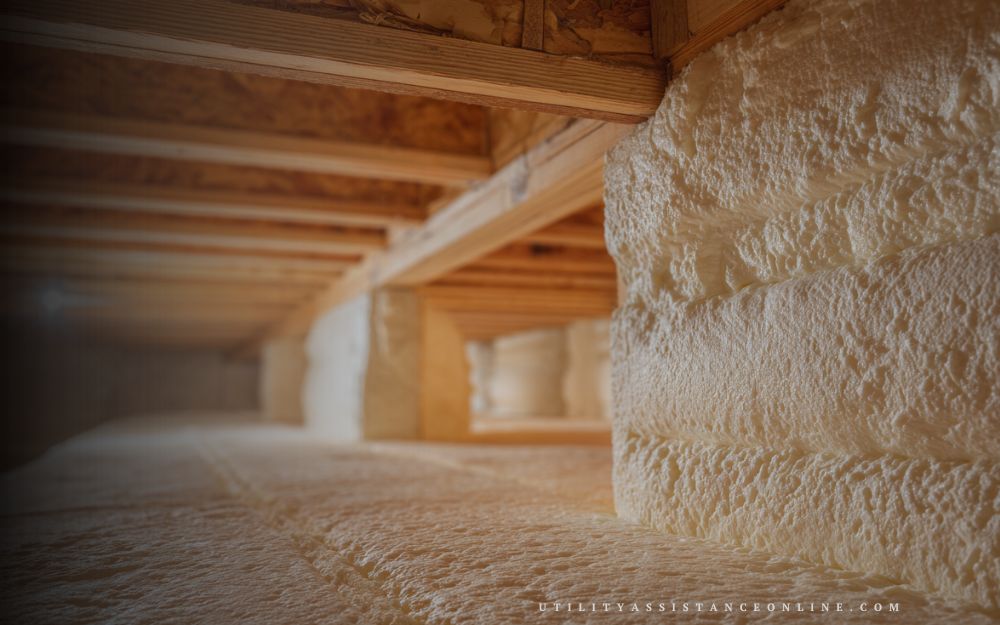
Closed-cell spray foam insulation is a high-performance insulation material that expands into a rigid air-sealing barrier. It can improve energy efficiency, reduce drafts, resist moisture, and strengthen building assemblies, but it costs more upfront and should be installed by trained professionals.
Closed-cell spray foam should be installed with proper equipment, ventilation, and protective gear.
What Is Closed-Cell Spray Foam Insulation?
Closed-cell spray foam insulation is a two-component material that is applied as a liquid and quickly expands into a dense, rigid foam. Once cured, it forms a continuous insulation and air-sealing layer that can reduce heat transfer, block drafts, and help manage moisture.
Unlike fiberglass batts or loose-fill insulation, closed-cell foam adheres to surfaces and seals many gaps as it expands. This makes it useful in attics, crawl spaces, basements, rim joists, wall cavities, roof decks, and other areas where air leakage is a major source of energy loss.
Closed-cell foam is commonly made from polyurethane or polyisocyanurate chemistry. Its structure contains millions of tiny closed cells, which helps it achieve a higher R-value per inch than many traditional insulation materials.
How Closed-Cell Spray Foam Works
During installation, heated chemical components are pumped through a spray gun and mixed at the nozzle. The foam expands on contact, bonds to the surface, and cures into a hard insulating layer.
Expands Into Gaps
The foam fills cracks, cavities, and irregular spaces that are difficult to seal with traditional insulation.
Creates an Air Barrier
At proper thicknesses, closed-cell spray foam can reduce air leakage and improve whole-home comfort.
Resists Moisture
Its dense structure absorbs less water than open-cell foam and can act as a vapor retarder in many assemblies.
Adds Rigidity
Once cured, the foam can add stiffness to certain wall, roof, and floor assemblies.
Closed-cell foam is often chosen for moisture-prone areas such as crawl spaces, basements, and rim joists.
Ready to Reduce Drafts and Energy Waste?
A professional insulation assessment can help you identify air leaks, moisture risks, and the best places to use closed-cell spray foam.
Main Benefits of Closed-Cell Spray Foam Insulation
Spray-in expanding closed-cell foam insulation is popular because it solves several building-performance problems at once. It insulates, air seals, helps control moisture, and can improve comfort in hard-to-treat spaces.
High R-Value
Closed-cell spray foam typically delivers about R-5.8 to R-6.9 per inch, depending on product formulation.
Better Air Sealing
It reduces drafts by sealing small openings around framing, penetrations, and uneven surfaces.
Moisture Resistance
Its dense closed-cell structure helps resist bulk water and can reduce condensation risk when properly designed.
Long Service Life
Properly installed foam can last for decades with minimal maintenance when protected from damage and UV exposure.
Structural Support
The rigid cured foam can add stiffness to some building assemblies, especially compared with loose-fill materials.
Compact Performance
Because it has high insulation value per inch, it works well where framing depth or space is limited.
Open-Cell vs. Closed-Cell Spray Foam
Open-cell and closed-cell spray foam are not interchangeable. Each has different density, cost, R-value, and moisture characteristics.
Feature
Open-Cell Foam
Closed-Cell Foam
Density
Lighter and softer
Denser and more rigid
R-Value
Lower R-value per inch
Higher R-value per inch
Moisture Resistance
More vapor permeable
Better moisture resistance
Best Uses
Interior walls, sound control, large cavities
Crawl spaces, basements, rim joists, exterior assemblies
Cost
Generally less expensive
Generally more expensive
Closed-cell foam can reduce heating and cooling waste by combining insulation with air sealing.
R-Value, Energy Savings, and Thermal Performance
R-value measures resistance to heat flow. The higher the R-value, the better the insulation resists heat transfer. Closed-cell spray foam is often chosen because it delivers strong R-value in a thin layer while also limiting air leakage.
However, R-value is only part of real-world performance. Air sealing, moisture control, installation quality, thermal bridging, HVAC condition, windows, and local climate all affect final energy savings.
Contextual insight: As a homeowner, closed-cell spray foam may deliver the biggest comfort gains in leaky attics, rim joists, crawl spaces, and bonus rooms over garages. As a renter, you may not be able to install foam, but you can ask your landlord about weatherization improvements. As a business owner, closed-cell foam may help reduce HVAC loads in warehouses, offices, and conditioned storage areas.
Costs and ROI of Closed-Cell Spray Foam Insulation
Closed-cell spray foam costs more than fiberglass, cellulose, and most open-cell foam installations. Pricing is often calculated by the board foot, which means one square foot installed one inch thick.
Typical closed-cell spray foam pricing often falls around $1.00 to $1.65 per board foot, but the installed cost can be higher depending on your region, project size, thickness, accessibility, removal of old insulation, ventilation needs, and contractor minimums.
Higher Upfront Cost
Closed-cell foam requires professional equipment, trained labor, protective gear, and careful jobsite preparation.
Lower Energy Waste
Energy savings come from both insulation value and reduced air leakage.
Best ROI Areas
Attics, crawl spaces, rim joists, metal buildings, and moisture-prone areas often deliver stronger value.
Long-Term Payback
Payback depends on utility rates, climate, existing insulation, air leakage, and total project cost.
Best Places to Use Closed-Cell Spray Foam
Closed-cell foam is not always needed everywhere in a building. It is most useful where moisture, air leakage, limited space, or durability matter most.
Crawl Spaces
Useful for air sealing and moisture-resistant insulation in vented or encapsulated crawl space projects.
Rim Joists
Excellent for sealing common air leaks around basement or crawl space framing transitions.
Basements
Can help manage moisture and temperature swings when used in correctly designed wall assemblies.
Roof Decks
Can support unvented attic assemblies when installed according to local building code requirements.
Metal Buildings
Helps reduce condensation and improve thermal performance in warehouses, workshops, and storage buildings.
Under Slabs
Some closed-cell products are used in specialty applications where compressive strength and moisture resistance are important.
Installation Process and Safety Considerations
Spray foam installation is not like placing fiberglass batts. It requires chemical handling, temperature control, proper mixing, ventilation, protective equipment, and trained installers.
Site preparation: Surfaces are cleaned, dried, and protected from overspray.
Moisture inspection: Leaks, rot, mold, and structural problems should be corrected before installation.
Equipment setup: Components are heated and pressurized according to manufacturer specifications.
Spray application: Foam is applied in controlled passes to the required thickness.
Curing and ventilation: The area is ventilated and kept off-limits until it is safe to re-enter.
Final inspection: The contractor checks coverage, thickness, adhesion, and missed spots.
Expert installation note: Occupants should follow the installer’s re-entry guidance. During application, installers need respirators, gloves, protective clothing, and jobsite ventilation because uncured spray foam chemicals can irritate skin, eyes, and lungs.
Closed-Cell Spray Foam Insulation Summary Table
Category
What to Know
R-Value
Typically about R-5.8 to R-6.9 per inch, depending on product.
Air Sealing
Excellent when installed at proper thickness and coverage.
Moisture Resistance
Better water resistance than open-cell foam and many traditional materials.
Cost
Often around $1.00 to $1.65 per board foot, with installed costs varying by project.
Best Uses
Crawl spaces, rim joists, basements, roof decks, metal buildings, and limited-depth cavities.
Main Drawback
Higher upfront cost and the need for professional installation.
Choosing the Right Spray Foam Contractor
The quality of the installer matters as much as the product. Poor mixing, spraying too thick in one pass, inadequate ventilation, or applying foam to wet surfaces can cause odor, shrinkage, poor adhesion, or uneven performance.
Ask About Training
Look for installers trained in spray polyurethane foam application and safety practices.
Confirm Product Specs
Request the product data sheet, R-value, ignition barrier requirements, and warranty details.
Discuss Ventilation
Ask when occupants and pets can safely re-enter the home after installation.
Review Code Needs
Ask whether an ignition barrier, thermal barrier, or building permit is required for your project.
Key Spray Foam Insulation Resources
Entity Name
Description
Official URL
Spray Polyurethane Foam Alliance
Industry organization offering technical information, training, and spray foam guidance.
This overview explains how spray foam insulation supports air sealing and energy performance in residential buildings.
Frequently Analyzed Topics
What is the difference between spray foam and traditional insulation?
Spray foam insulation expands and adheres to surfaces, helping seal air leaks while insulating. Traditional insulation such as fiberglass or cellulose mainly slows heat transfer but usually needs separate air sealing for best performance.
Can closed-cell foam insulation help prevent mold?
Closed-cell foam can help reduce moisture intrusion and condensation risk when installed correctly, which may lower conditions that support mold growth. It does not fix existing leaks, mold, drainage problems, or poor ventilation.
How much does closed-cell spray foam insulation cost?
Closed-cell foam is often priced by the board foot and commonly ranges around $1.00 to $1.65 per board foot before project-specific variables. Final installed costs depend on thickness, access, labor, region, prep work, and code requirements.
Is closed-cell spray foam safe for homes?
When properly installed and cured, closed-cell spray foam is commonly used in homes. During installation, uncured chemicals require protective equipment, ventilation, and re-entry precautions. Always follow the manufacturer’s safety instructions and contractor guidance.
How long does spray foam installation take?
Many residential projects can be completed in one to two days, depending on size, access, preparation, and curing requirements. Larger homes, crawl spaces, attics, and commercial buildings may take longer.
Does closed-cell spray foam shrink over time?
Properly installed closed-cell foam is designed to remain stable for many years. Shrinkage, cracking, or odor problems are more often associated with poor installation, incorrect mixing, unsuitable surface conditions, or product defects.
Conclusion: Is Closed-Cell Spray Foam Worth It?
Closed-cell spray foam insulation is one of the strongest options for homeowners and building owners who need high R-value, air sealing, moisture resistance, and durability in one product.
It is especially useful in crawl spaces, rim joists, basements, roof decks, metal buildings, and other areas where air leakage or moisture can drive energy waste and comfort problems. The trade-off is cost: closed-cell foam is more expensive than many traditional insulation options and requires professional installation.
For the best results, compare insulation strategies, ask contractors for detailed proposals, and make sure the project follows local building codes, ventilation requirements, and product specifications.
Start Saving Energy With Better Insulation
Closed-cell spray foam can be a smart upgrade when comfort, moisture resistance, and long-term energy performance matter.
Identify drafty or moisture-prone areas first
Compare closed-cell foam against other insulation options
Ask contractors for R-value, thickness, and warranty details
Confirm safety, ventilation, and re-entry procedures
Review weatherization and utility savings opportunities
Winter Storm Enzo Houston refers to the historic winter storm that impacted the Greater Houston area from January 20 to 22, 2025, dropping approximately four inches of snow and bringing sub-freezing temperatures. Unlike Winter Storm Uri in 2021, which caused 7.8 million Houston-area power outages, Enzo affected only about 28,500 CenterPoint Energy customers at its peak. More than 99.9% of CenterPoint customers maintained normal electric service throughout the storm, thanks to aggressive pre-positioning of 3,000 frontline workers including 1,200 mutual aid personnel from Virginia, North Carolina, and Florida.
What Winter Storm Enzo Houston Looked Like: January 20-22, 2025
Houston was blanketed with approximately four inches of snow on Jan. 21, 2025.
Houston was blanketed with layers of snow on the morning of January 21, 2025, pausing city services as residents and officials braced for icy roads, frozen and broken pipes, and the kind of widespread power outages that defined Winter Storm Uri four years earlier. The National Weather Service had upgraded the Winter Storm Watch to a Winter Storm Warning for Southeast Texas beginning at 6 p.m. Monday through 6 p.m. Tuesday. ERCOT had issued a Weather Watch warning of extreme cold, higher electrical demand, and the potential for lower reserves.
Yet by January 22, city officials announced minimal damage as a result of careful preparation and emergency services. Mayor John Whitmire credited the relatively smooth ride to coordination between the City of Houston, CenterPoint Energy, Entergy Texas, and the deep freeze-readiness investments made after the 2021 Uri disaster. For Houston residents who had lived through Uri, Winter Storm Enzo Houston was a remarkable turnaround story.
Key Players in the Winter Storm Enzo Houston Response
CenterPoint Energy
CenterPoint Energy serves 2.8 million electric customers across 12 Greater Houston-area counties. Its proactive pre-storm mobilization is widely credited with the low outage numbers during Enzo.
Entergy Texas
Entergy Texas serves Southeast Texas customers, including portions of the Houston metro east of the CenterPoint territory. Operates within the MISO grid rather than ERCOT.
ERCOT
The Electric Reliability Council of Texas manages the state’s main power grid. Issued a Weather Watch from Monday to Wednesday but grid conditions remained normal throughout Enzo.
National Weather Service
The NWS Houston/Galveston office issued the Winter Storm Warning that drove utility, city, and resident preparation. Detailed forecasting helped utilities position mutual aid in advance.
Mutual Aid Network
Approximately 1,200 mutual aid workers traveled from Virginia, North Carolina, Florida, and other states to support CenterPoint’s pre-positioned response.
iSTAT
The Individual State of Texas Assessment Tool, used by Texas Division of Emergency Management to collect self-reported storm damage data from residents and businesses.
Winter Storm Enzo Houston Power Outages: The Numbers
Outages stayed well below 1% of CenterPoint’s customer base throughout the storm.
The single most important fact about Winter Storm Enzo Houston is the contrast with Winter Storm Uri. During Uri in 2021, Houston saw approximately 7.8 million power outages. During Enzo in 2025, only about 28,500 customers lost power across CenterPoint’s entire 12-county service area, and as of January 22, CenterPoint reported only 116 outages remaining affecting 1,604 customers.
Outage timeline
Monday evening, January 20: Wintry precipitation begins. CenterPoint’s Emergency Operations Center activated. Three staging sites established across the service territory.
Tuesday, January 21, 11 a.m.: About 18,700 customers restored since 12:01 a.m.; 2,800 customers currently out of power. 99.9% receiving normal service.
Tuesday, January 21, 9 p.m.: Approximately 28,500 customers restored across CenterPoint’s 12-county service area since 12:01 a.m. Sub-freezing temperatures persist overnight.
Wednesday, January 22: Only 116 outages remaining affecting 1,604 customers. CenterPoint begins releasing mutual aid workers back to their home states.
Entergy Texas response
Entergy Texas, which serves portions of Southeast Texas east of CenterPoint’s footprint, reported about 931 customers without power at noon on January 21. Hundreds of linemen had been on standby across Southeast Texas, having spent the week before Enzo insulating pipes and power plant equipment and trimming trees near power lines. The Public Utility Commission of Texas had unanimously approved the first step of Entergy’s $137 million plan to upgrade key infrastructure to reduce storm-related outages.
99.9%
Customers with Power During Enzo
More than 99.9% of CenterPoint’s 2.8 million Greater Houston-area electric customers received normal electric service throughout Winter Storm Enzo, a sharp contrast to Winter Storm Uri’s 7.8 million Houston-area outages in 2021.
Winter Storm Enzo Houston vs. Winter Storm Uri: A Tale of Two Freezes
Understanding what changed between 2021 and 2025 is the most useful framing for Winter Storm Enzo Houston. The same city, similar weather conditions, dramatically different outcomes.
Factor
Winter Storm Uri (2021)
Winter Storm Enzo (2025)
Peak Houston-area outages
~7.8 million
~28,500
ERCOT grid status
Forced rolling blackouts
Normal grid conditions
Mutual aid pre-positioned
Minimal in advance
1,200+ workers from multiple states
Power plant winterization
Not mandated
Post-Uri rules in effect
Restoration timeline
Days to weeks for hardest-hit
Most customers restored within 24 hours
How Top Utilities Restored Service During Winter Storm Enzo Houston
The headline story of Winter Storm Enzo Houston isn’t really about damage. It’s about how the major utilities prepared in advance and prevented Uri-scale disaster from repeating. Here’s what each major player did.
CenterPoint Energy’s Storm Response
CenterPoint executed its cold weather readiness plan starting on January 19, before Enzo arrived. The company secured an additional 1,200 mutual aid workers, activated its Emergency Operations Center Monday evening, and stood up three staging sites with pre-positioned crews across its service territory. Approximately 3,000 CenterPoint frontline workers, contractors, and mutual aid personnel responded to scattered outages throughout the storm.
CenterPoint also launched a cloud-based Outage Tracker available in English and Spanish that allowed customers to see outages by county, city, and zip code. Customers were encouraged to enroll in Power Alert Service to receive outage details, estimated restoration times, and customer-specific restoration updates via phone call, text, or email.
Entergy Texas’s Storm Response
Entergy Texas, which operates within the MISO grid rather than ERCOT, deployed hundreds of linemen on standby across Southeast Texas. The week before Enzo, crews insulated pipes and power plant equipment, inspected substations and transmission lines, and completed annual right-of-way clearing to reduce tree-fall risk. Entergy’s customers were encouraged to sign up for outage and restoration notifications by text (REG to 36778), email, or phone. As of 4 p.m. Monday after the storm passed, fewer than 800 Entergy customers remained without power.
ERCOT’s Grid Management
ERCOT issued a Weather Watch from Monday to Wednesday due to extreme cold and the potential for lower reserves. Critically, unlike during Uri in 2021, ERCOT did not need to initiate rolling blackouts. Grid conditions remained normal throughout the storm thanks to post-Uri winterization rules now applied to power plants and transmission infrastructure.
Author’s Pro Tip
Enroll in outage alerts before the next storm. The single most important step Houston households can take after Winter Storm Enzo is signing up for CenterPoint’s Power Alert Service and Entergy’s text notifications (text REG to 36778) before the next winter event. As a customer, you’ll get customer-specific restoration estimates rather than relying on news reports or social media. Combined with the cloud-based outage trackers, this gives you real-time information that’s far more accurate than what was available during the 2021 Uri crisis. Don’t wait for the next storm warning to set this up.
— Editorial Team, UtilityAssistanceOnline
Recovering from Storm-Related Utility Bills?
Texas LIHEAP, Texas CEAP, and CenterPoint payment plans can help cover bills spiked by extreme weather. Find your local assistance options.
Winter Storm Enzo Houston Damage Assessment and Recovery
Despite four inches of snow, Houston emerged with minimal damage.
Houston received approximately four inches of snow on January 21-22, 2025, but city officials announced on January 22 that there was minimal damage as a result of careful preparation and emergency services. Mayor John Whitmire credited the relatively smooth outcome to coordinated planning between the City, CenterPoint, Entergy, and state-level agencies. CenterPoint released mutual aid workers back to Virginia, North Carolina, and Florida as recovery wound down on January 22.
Reporting damage to the state
Texas Governor Greg Abbott urged Texans impacted by Enzo’s freezing temperatures to document and report any property and agricultural damages to the Texas Division of Emergency Management’s online, self-reported damage assessment tool. Residents could also report storm damage to homes and businesses using the Individual State of Texas Assessment Tool, or iSTAT. As a homeowner whose pipes burst or whose roof was damaged, this is the official channel for getting state assistance coordinated.
Utility bills and aftermath
Even with limited outages, prolonged sub-freezing temperatures spiked heating costs across Houston. Households facing higher-than-normal bills can apply for the Texas Comprehensive Energy Assistance Program (CEAP), which delivers federal LIHEAP funds in Texas. Houston-area residents apply through Harris County Community Services Department or BakerRipley, depending on county and program availability. For broader context on assistance options, see our Texas weatherization assistance program guide and our companion guide to mastering utility bills.
Lessons Learned from Winter Storm Enzo Houston
The Enzo response sets a new benchmark for Houston-area winter storm preparedness. As a resident planning for future events, several specific lessons emerged.
Preparation matters more than damage control
CenterPoint’s pre-storm mobilization, beginning the weekend before Enzo’s Monday evening arrival, was the single most important factor in keeping outages low. Pre-positioning mutual aid workers, activating the Emergency Operations Center early, and standing up staging sites in advance dramatically reduced response time.
Post-Uri winterization rules worked
Power plant winterization requirements adopted after Uri produced their intended effect. ERCOT’s grid handled the extreme demand without forced rolling blackouts, which was the proximate cause of most Uri-era outages. For Houston households, the lesson is that policy changes at the state level can directly affect whether your power stays on in the next storm.
Customer-side preparation still matters
Even with excellent utility response, Houston households can do more to protect themselves. Insulating attics, sealing air leaks, dripping faucets during freezes, and disconnecting outdoor hoses remain essential. For deeper guidance, see our companion guide on 5 ways to make an old home energy efficient and our guide to weatherization.
Frequently Asked Questions About Winter Storm Enzo Houston
When did Winter Storm Enzo hit Houston?
Winter Storm Enzo impacted the Greater Houston area from the evening of Monday, January 20, 2025, through Wednesday, January 22, 2025. The National Weather Service issued a Winter Storm Warning beginning at 6 p.m. Monday through 6 p.m. Tuesday, with sub-freezing temperatures persisting overnight into Wednesday morning.
How many Houston customers lost power during Winter Storm Enzo?
Approximately 28,500 CenterPoint Energy customers across the 12-county Greater Houston service area experienced outages during Enzo. At any given moment, more than 99.9% of CenterPoint’s 2.8 million customers had normal electric service. By January 22, only 116 outages affecting 1,604 customers remained.
Why was Enzo less devastating than Winter Storm Uri?
Three main factors. First, CenterPoint and Entergy pre-positioned massive mutual aid forces and activated emergency operations centers before the storm arrived. Second, ERCOT did not need to initiate rolling blackouts because post-Uri winterization rules allowed power plants to operate through the freeze. Third, weather conditions, while severe, were less prolonged than Uri’s multi-day deep freeze in 2021.
How can I report damage from Winter Storm Enzo?
Texas Governor Greg Abbott urged residents to use the Texas Division of Emergency Management’s online self-reported damage assessment tool. Residents can also report damage to homes and businesses using the Individual State of Texas Assessment Tool (iSTAT). These reports help the state coordinate aid and qualify communities for federal disaster declarations.
How do I sign up for CenterPoint and Entergy outage alerts?
For CenterPoint, enroll in Power Alert Service through your online account at CenterPointEnergy.com/StormCenter to receive outage details and customer-specific restoration updates via phone, text, or email. For Entergy Texas, text REG (your account number) (ZIP code) to 36778, or sign up through myEntergy.com. Both services are free.
What utility assistance is available for Houston households after Enzo?
Texas LIHEAP (delivered as the Comprehensive Energy Assistance Program, or CEAP) provides bill payment help for income-qualified households. Houston-area residents apply through Harris County Community Services Department or BakerRipley. CenterPoint also offers payment arrangements and deferred payment plans for customers facing financial hardship after extreme weather events.
What Are the Top Utility Assistance Programs in San Diego?
Utility Assistance Programs in San Diego include SDG&E’s CARE program (30% or more monthly discount), the FERA program (18% discount for households of three or more), federal LIHEAP administered by MAAC Project and Campesinos Unidos with up to $1,500 per household, the Neighbor-to-Neighbor Fund providing up to $150 in emergency aid, the PIPP Pilot capping bills at a percentage of income, Arrearage Management Payment (AMP) for debt forgiveness, and the Medical Baseline Allowance for households with qualifying medical needs. To apply, contact 2-1-1 San Diego or visit sdge.com/assistance.
Why Utility Assistance Programs in San Diego Matter in 2026
San Diego households face some of California’s steepest utility costs, making assistance programs essential.
San Diego residents face some of the highest utility costs in the country. The region’s electricity rates run significantly above the national average due to infrastructure investments, wildfire mitigation costs, and limited local generation. For low- to middle-income households, those bills are a serious budget strain, especially in summer when air conditioning runs constantly and winter when heating costs spike.
The good news is that San Diego County has one of the most comprehensive utility assistance networks in California. Between SDG&E’s own discount programs, federal LIHEAP delivered through MAAC Project and Campesinos Unidos, and emergency grants from Neighbor-to-Neighbor, eligible San Diego households can stack several thousand dollars in annual savings if they apply strategically. This guide walks through every program, who qualifies, what each pays, and the right order to apply.
Key Utility Assistance Programs in San Diego at a Glance
CARE
The California Alternate Rates for Energy program through SDG&E provides a 30% or more monthly bill discount for income-qualified households. Nearly 275,000 SDG&E customers receive CARE/FERA discounts.
FERA
The Family Electric Rate Assistance program provides an 18% monthly electric bill discount for households of three or more who don’t qualify for CARE but still meet income limits.
LIHEAP
The federal Low Income Home Energy Assistance Program provides up to $1,500 per household toward past-due energy bills, administered locally by MAAC Project and Campesinos Unidos by zip code.
Neighbor-to-Neighbor
Provides up to $150 toward SDG&E bills for customers experiencing temporary financial hardship but not eligible for state or federal assistance.
PIPP & AMP
The Percentage of Income Payment Plan caps monthly bills as a percentage of income. The Arrearage Management Payment plan provides 12-month debt forgiveness for past-due CARE/FERA customers.
Medical Baseline
Provides additional gas and electricity at the lowest available rate for households with qualifying medical conditions or medical equipment, plus PSPS notification priority.
SDG&E Discount Programs: The Backbone of Utility Assistance Programs in San Diego
SDG&E’s CARE and FERA programs serve nearly 275,000 San Diego County customers.
SDG&E runs the primary discount programs that most San Diego households should apply for first. These are not one-time grants but ongoing monthly discounts that compound over the year.
CARE (California Alternate Rates for Energy)
CARE provides a 30% or more monthly discount on your SDG&E bill. You may qualify based on household size and income, or automatically if you participate in programs like CalFresh, Medicaid, SSI, or TANF. As a San Diego household, this is the single highest-impact program because it applies to every month going forward, not just one bill. SDG&E will automatically check FERA eligibility if your CARE application is denied for income reasons.
FERA (Family Electric Rate Assistance)
FERA provides an 18% monthly electric bill discount for households of three or more who don’t qualify for CARE but still meet program income limits. FERA is electric-only (not gas), but for many San Diego families with kids, the savings stack well with the broader assistance package.
PIPP Pilot (Percentage of Income Payment Plan)
SDG&E’s PIPP Pilot is one of the most powerful and least-known programs. Eligible customers receive a monthly bill cap based on a percentage of household income, with the difference between their actual usage and the cap covered as a line-item discount. PIPP is limited to specific zip codes (based on COVID-era disconnection data) or to customers who were disconnected twice between March 2019 and February 2020. The pilot runs through 2027.
AMP (Arrearage Management Payment Plan)
AMP provides qualifying CARE or FERA households with past-due bills a 12-month payment and debt forgiveness plan. To be eligible, you must be enrolled in CARE or FERA, have been an SDG&E customer for at least six months, and have had at least one on-time payment in the last two years. If you stay on track with current payments, SDG&E forgives portions of past-due debt over time.
Medical Baseline Allowance
For households with qualifying medical devices or climate control needs, Medical Baseline Allowance provides additional gas and electricity at the lowest available rate. It also gives you priority notification during Public Safety Power Shutoff (PSPS) events, which is critical for medical equipment users.
275K
SDG&E Customers Receiving CARE/FERA Discounts
Nearly 275,000 SDG&E customers currently receive monthly bill discounts through the CARE and FERA programs. If you haven’t applied yet and qualify by income, you’re leaving 30% or more in monthly savings on the table.
Federal LIHEAP and Utility Assistance Programs in San Diego County
LIHEAP is the largest single-grant program available to San Diego households. It is overseen by the California Department of Community Services and Development (CSD) and administered locally by two nonprofit agencies based on your zip code: Campesinos Unidos, Inc. (CUI) and the MAAC Project.
MAAC Project
The Metropolitan Area Advisory Committee on Anti-Poverty of San Diego County (MAAC) administers LIHEAP for portions of San Diego County. The maximum benefit is up to $1,500 per household, based on household size and gross monthly income. Disconnection-notice households are prioritized, and applications are completed online through MAAC’s LIHEAP web page.
Campesinos Unidos, Inc. (CUI)
Campesinos Unidos serves Imperial, Riverside, and parts of San Diego counties. Their San Diego office at 885 Gateway Center Way, Suite 103, processes LIHEAP applications by appointment Monday through Thursday, 8 a.m. to 11:30 a.m. and 1 p.m. to 3:30 p.m.
LIHEAP eligibility
You must be a legal U.S. resident
You must meet income guidelines based on household size
You must be responsible for energy costs at the residence
You must not have received LIHEAP funding in the past 12 months
Automatic categorical eligibility if you participate in CalFresh or CalWORKs
Once approved, LIHEAP funds go directly to SDG&E and are applied to your account within 10 to 12 weeks. Importantly, receiving a LIHEAP pledge protects you from service interruptions related to your past-due balance during the processing period.
Comparing the Top Utility Assistance Programs in San Diego
Program
Who Qualifies
Benefit
CARE
Income-qualified or on CalFresh, Medicaid, SSI, TANF
30%+ monthly bill discount
FERA
3+ person households not eligible for CARE
18% monthly electric bill discount
LIHEAP
Income-qualified, not received in last 12 months
Up to $1,500 one-time per year
Neighbor-to-Neighbor
Temporary hardship, not eligible for other aid
Up to $150 one-time per year
LIHWAP (Water)
Low-income water customers (renters included)
Up to $2,000 toward water/wastewater bills
Author’s Pro Tip
Start with CARE, not LIHEAP. Most San Diego households fixate on LIHEAP because of the $1,500 ceiling, but CARE delivers more total value year over year. A 30% discount on a $250 monthly SDG&E bill saves $900 annually, every year, indefinitely, vs. LIHEAP’s one-time annual benefit. The smart sequence is: (1) enroll in CARE/FERA online at sdge.com/assistance (takes 10 minutes), (2) apply for LIHEAP through MAAC or Campesinos for past-due help, (3) ask about PIPP if you’re in an eligible zip code, (4) request Medical Baseline if anyone in your home uses qualifying equipment. Call 2-1-1 San Diego if you want a single agent to walk you through the full screen.
— Editorial Team, UtilityAssistanceOnline
Facing a Disconnection Notice in San Diego?
LIHEAP applications are prioritized for households with 24-48 hour shutoff notices. Time matters. Find your fastest application path now.
How to Apply for Utility Assistance Programs in San Diego
Each program has its own application path. 2-1-1 San Diego can screen you for all of them at once.
Step 1: Call 2-1-1 San Diego for full screening
2-1-1 San Diego is a free, confidential service that screens you for every utility assistance program at once. They can help you submit your CARE/FERA application directly to SDG&E and refer you to MAAC or Campesinos for LIHEAP based on your zip code. As a San Diego household balancing time and stress, this is the single most efficient entry point.
Step 2: Enroll in CARE or FERA online
Apply online at sdge.com/assistance. The form takes about 10 minutes. You’ll need household income for all members and basic identifying information. If you apply for CARE and don’t qualify, SDG&E automatically checks FERA eligibility for you.
Step 3: Apply for LIHEAP through MAAC or Campesinos
Determine your local provider by zip code at csd.ca.gov or by calling 2-1-1. MAAC accepts applications online through their LIHEAP portal. Campesinos Unidos takes appointments at 885 Gateway Center Way, Suite 103, San Diego. Bring required documentation: proof of income, photo ID, recent utility bill, and Social Security numbers for all household members. For categorical eligibility, bring your CalFresh or CalWORKs award letter.
Step 4: Stack additional programs as needed
Once your core CARE/LIHEAP enrollment is in motion, ask about Neighbor-to-Neighbor for any temporary hardship not covered, PIPP for income-capped billing, AMP for past-due debt forgiveness, and Medical Baseline if anyone in your household has qualifying medical needs. Each additional program adds to your annual benefit total.
Documents you’ll need
Proof of household income for all members (pay stubs, SSI/SSDI award letters, unemployment statements, child support)
Photo ID for head of household
Current SDG&E bill with account number
Social Security numbers for household members
If applicable: CalFresh, CalWORKs, SSI, or TANF award letters for categorical eligibility
If applicable: disconnection notice for priority Crisis processing
Beyond Energy: Adjacent Utility Assistance Programs in San Diego
San Diego’s utility assistance ecosystem extends beyond electricity and gas. Several adjacent programs ease the broader cost pressure that pushes households into utility hardship.
LIHWAP (Water Bill Assistance)
The Low Income Household Water Assistance Program pays up to $2,000 in water and wastewater bills for income-qualified San Diego households, including renters whose utility payments are included in their rent. Like LIHEAP, LIHWAP is administered locally by MAAC and Campesinos Unidos. Apply through whichever agency serves your zip code.
Cool Zone Program
San Diego County’s Cool Zone Program is a network of free, air-conditioned settings such as libraries and community centers across the county. Available to older adults, persons with disabilities, and anyone needing respite from extreme heat. As a Cool Zone visitor, you can reduce your home cooling costs during the worst heat days while helping conserve grid energy.
Frequently Asked Questions About Utility Assistance Programs in San Diego
Who qualifies for Utility Assistance Programs in San Diego?
Most programs use household income limits based on size, with thresholds varying by program. CARE typically allows income up to around 200% of the Federal Poverty Level. Households on CalFresh, CalWORKs, Medicaid, SSI, or TANF are typically automatically categorically eligible for CARE and LIHEAP. Both homeowners and renters can qualify for most programs.
How much can I save with SDG&E’s CARE program?
CARE provides a 30% or more monthly discount on your SDG&E bill. On a typical San Diego household bill of $250 to $350 per month, that translates to $900 to $1,200 in annual savings. Unlike one-time grants, CARE applies every month for as long as you remain enrolled and meet program guidelines.
How long does LIHEAP take to process in San Diego?
Once approved, LIHEAP funds are sent directly to SDG&E and applied to your account within 10 to 12 weeks. Importantly, receiving a LIHEAP pledge protects you from service interruption related to your past-due balance during processing. Households with active 24-48 hour disconnect notices receive priority processing.
Can renters apply for utility assistance in San Diego?
Yes. Renters can apply for CARE, FERA, LIHEAP, PIPP, AMP, and Medical Baseline as long as the SDG&E account is in their name and the address is their primary residence. ESAP weatherization upgrades are also available to renters (with landlord permission). LIHWAP water bill assistance even covers renters whose water is included in rent.
Why are San Diego utility bills so high compared to other cities?
San Diego’s electricity rates run well above the national average due to several factors: limited local power generation, heavy reliance on imported energy, infrastructure investments for wildfire mitigation and grid hardening, and the high cost of transmission across long distances. CARE, FERA, PIPP, and LIHEAP exist specifically to offset these structural costs for income-qualified households.
What if I’m not eligible for state or federal programs?
SDG&E’s Neighbor-to-Neighbor program is specifically designed for households experiencing temporary financial hardship who don’t qualify for state or federal assistance. It provides up to $150 toward your SDG&E bill. Funded by SDG&E shareholders and employees, it’s a useful gap-coverage option for households just above the standard income thresholds.
Apply for Utility Assistance Programs in San Diego Today
What Are the Top Emergency Utility Assistance Programs in Arkansas?
Emergency Utility Assistance Programs in Arkansas include federal LIHEAP administered by the Arkansas Energy Office through Community-Based Organizations in all 75 counties (Regular benefits $60-$570 heating and $60-$344 cooling, plus Crisis benefits up to $600 per season), the Dollar Energy Fund Hardship Program for SWEPCO and Entergy customers (up to $200 per utility per program year), LIHWAP for past-due water and wastewater bills, the 2-1-1 Arkansas hotline sponsored by Black Hills Energy, and the Entergy Sales Tax Exemption for households earning under $12,000 annually. Apply through your local CBO or call 2-1-1.
Why Emergency Utility Assistance Programs in Arkansas Matter in 2026
Arkansas’s seasonal extremes drive utility bills that strain working family budgets across the state.
Arkansas’s brutal summer heat and cold winter snaps drive utility costs that strain working family budgets across the state. The good news is that Arkansas has one of the more layered utility assistance ecosystems in the South. Between federal LIHEAP delivered through a network of Community-Based Organizations in all 75 counties, the Dollar Energy Fund Hardship Program covering SWEPCO and Entergy customers, water bill assistance through LIHWAP, and the statewide 2-1-1 referral hotline, eligible households can stack several hundred dollars in annual relief.
This guide walks through every emergency utility assistance program available to Arkansas residents in the 2025-2026 program year, who qualifies, what each pays, and exactly how to apply. As an Arkansas resident facing an unexpectedly high bill or a disconnect notice, the smart move is to apply for all of them at once because each program has different funding cycles and eligibility tiers.
Key Emergency Utility Assistance Programs in Arkansas at a Glance
Arkansas LIHEAP
The federal Low Income Home Energy Assistance Program administered by the Arkansas Energy Office (AEO) at the Department of Energy & Environment. Delivered through CBOs in all 75 counties.
LIHEAP Crisis
Year-round emergency assistance for households facing disconnection. Up to $600 maximum for Winter Crisis and $600 for Summer Crisis (FY 2026 published benefits).
Dollar Energy Fund
The Arkansas Utility Assistance Program hardship grant for SWEPCO and Entergy customers, up to $200 per utility per program year (Oct 1, 2025 – Sept 30, 2026).
LIHWAP
The Low Income Household Water Assistance Program helps with past-due water and wastewater bills. Households on LIHEAP, SNAP, SSI, or TANF are typically automatically eligible.
2-1-1 Arkansas
A free, confidential, 24-hour multilingual hotline administered by United Way and sponsored by Black Hills Energy. Connects callers to local human service agencies across the state.
Entergy Sales Tax Exemption
Registered Entergy customers with annual household income under $12,000 are exempted from sales tax on the first 500 kWh each month.
LIHEAP: The Anchor of Emergency Utility Assistance Programs in Arkansas
LIHEAP is the largest single-grant program available to Arkansas households. The Arkansas Energy Office (AEO) within the Department of Energy & Environment administers the program statewide, but applications go directly to Community-Based Organizations covering all 75 counties. Importantly, AEO does not process applications. You must submit your application to the CBO that serves your county.
FY 2026 LIHEAP benefits
Regular Heating: $60 minimum, $570 maximum
Regular Cooling: $60 minimum, $344 maximum
Winter Crisis: Up to $600 maximum
Summer Crisis: Up to $600 maximum
Benefits are calculated based on household income, number of household members, and the type of energy source (electricity, gas, propane, wood, pellets). Approved benefits are sent directly to your utility as a credit against your account, not as a check to you. Arkansas LIHEAP funding for FY 2026 totals $35,109,772, including an additional $125,577 from the Infrastructure Investment and Jobs Act.
LIHEAP eligibility
Household members must be U.S. citizens or legal resident non-citizens
Income at or below 60% of Arkansas State Median Income for heating, cooling, and crisis (8+ household members at 150% Federal Poverty Level)
Weatherization uses a higher threshold of 200% Federal Poverty Level
Households must meet a countable resource standard including cash, bank accounts, and investments (including cryptocurrency)
Only residential applicants; businesses are excluded
2025-2026 application timing
Arkansas’s LIHEAP Winter Heating Program began accepting applications on Monday, January 5, 2026. Regular Assistance is available until March 31, 2026, while Crisis Assistance is available until April 30, 2026, or until funds are exhausted. Cooling assistance typically opens in summer. As an Arkansas household, applying as early as possible in the program year matters: applications are accepted on a first-come, first-served basis, and funds historically run out before the deadline.
99K+
Arkansas Households Served by LIHEAP in FY 2024
In FY 2024, Arkansas LIHEAP served 29,299 heating households, 24,954 cooling households, 25,073 winter crisis cases, and 19,851 summer crisis cases. Total funding for FY 2026 is $35.1 million.
Dollar Energy Fund: The Last-Resort Layer in Emergency Utility Assistance Programs in Arkansas
Dollar Energy Fund grants are designed as a last resort after LIHEAP and other federal funds are exhausted.
The Arkansas Utility Assistance Program, administered by Dollar Energy Fund, is a hardship grant program for SWEPCO (AEP) and Entergy customers who have applied for LIHEAP and other federal funds but still need help. It’s deliberately structured as a fund of last resort because it goes above and beyond what federal, state, and other programs provide.
Grant amounts and timing
For the 2025-2026 program year (October 1, 2025 through September 30, 2026), the maximum grant amount is $200 per utility per program year. Grants are dispersed on a first-come, first-served basis to eligible applicants while funding remains. Grant awards are based on need, and each household’s circumstances are considered individually. The average Arkansas Dollar Energy Fund grant has historically been around $120, with funds typically remaining for both SWEPCO and Entergy customers throughout the program year.
Dollar Energy Fund eligibility
SWEPCO customers: Total gross household income at or below 200% of the Federal Poverty Income Guidelines
Entergy customers: Total gross household income at or below 125% of the Federal Poverty Income Guidelines
Eligible customers must apply for LIHEAP funding first before applying for a Dollar Energy Fund grant
Only one grant per utility per program year
Comparing Emergency Utility Assistance Programs in Arkansas
Program
Who Qualifies
2025-2026 Benefit
LIHEAP Heating
Up to 60% State Median Income
$60 to $570 winter heating credit
LIHEAP Cooling
Up to 60% State Median Income
$60 to $344 summer cooling credit
LIHEAP Crisis
LIHEAP-eligible with shutoff or emergency
Up to $600 per season (Winter and Summer)
Dollar Energy Fund
SWEPCO (200% FPL) or Entergy (125% FPL) customers
Up to $200 per utility per year
LIHWAP
Households on LIHEAP, SNAP, SSI, or TANF with past-due water bills
Water/wastewater bill assistance
Author’s Pro Tip
Apply for LIHEAP first, then Dollar Energy Fund. The Dollar Energy Fund explicitly requires you to apply for LIHEAP first because it’s a last-resort fund. As an Arkansas SWEPCO or Entergy customer, the right sequence is: (1) find your CBO at the Arkansas Energy Office’s CAA Service Network Territories page, (2) apply for LIHEAP heating or cooling immediately, (3) once you receive your LIHEAP decision letter, apply for a Dollar Energy Fund grant of up to $200, (4) if you still have a water or wastewater balance, apply for LIHWAP. Skipping the LIHEAP step is the #1 reason Dollar Energy Fund applications get denied. A combined LIHEAP + Dollar Energy Fund stack can deliver $800+ in a single program year for a household facing a serious utility crisis.
— Editorial Team, UtilityAssistanceOnline
Facing a Disconnect Notice in Arkansas?
LIHEAP Crisis applications are prioritized for households with active shutoff notices. Call 2-1-1 immediately to find your fastest application path.
How to Apply for Emergency Utility Assistance Programs in Arkansas
Apply through your county’s designated Community-Based Organization, not the Arkansas Energy Office directly.
Step 1: Find your local Community-Based Organization
Arkansas LIHEAP applications must go to the CBO that serves your specific county. Visit the Arkansas Energy Office’s CAA Service Network Territories page at adeq.state.ar.us/energy/assistance/liheap.aspx, click on your county, and you’ll see the designated agency’s contact information. Alternatively, call 2-1-1 Arkansas at any time of day or night for free, multilingual help finding your CBO. The 2-1-1 service searches statewide resources and is sponsored by Black Hills Energy.
Step 2: Gather your documentation
Each CBO will require:
Proof of income for all household members 18 and older (pay stubs, SSI/SSA benefit letters, unemployment statements)
Copies of current gas and electric bills
Photo ID for head of household
Social Security numbers for all household members
School schedule for anyone 18 or older not employed
Claims History Form from the Employment Office for any non-working adult
Zero Income and Contribution Statement Forms for any non-working applicant
Step 3: Submit your application
You may apply online, in-person, by email, or by mail through your CBO. After the CBO processes and approves your application, they notify your utility company with a Promise to Pay credit that protects you from disconnection during the processing period. Allow up to 30 days for status updates after submission.
Step 4: Stack additional programs
Once LIHEAP is in motion, apply for the Dollar Energy Fund grant if you’re a SWEPCO or Entergy customer. For past-due water bills, apply for LIHWAP through the same CBO. If your annual household income is under $12,000 and you’re an Entergy customer, register for the Entergy Sales Tax Exemption to save sales tax on the first 500 kWh of monthly usage.
Beyond LIHEAP: Other Emergency Utility Assistance Programs in Arkansas
Several adjacent programs work alongside LIHEAP and Dollar Energy Fund to ease the broader financial pressure that pushes Arkansas households into utility hardship.
LIHWAP (Water Bill Assistance)
The Low Income Household Water Assistance Program pays past-due water and wastewater bills for income-qualified Arkansas households. Households receiving LIHEAP, SNAP, SSI, or TANF benefits with past-due balances are automatically eligible, though they still must submit a LIHWAP application. Your water and wastewater utility must be enrolled in the program to receive LIHWAP payments. Apply through the same CBO that handles your LIHEAP application.
Arkansas Weatherization Assistance Program
For longer-term utility cost reduction, the federally funded Arkansas WAP delivers free energy efficiency upgrades to households at or below 200% of the Federal Poverty Level. Eligible measures include insulation, air sealing, HVAC repairs, and weatherstripping. Like LIHEAP, weatherization is delivered through the same network of Community-Based Organizations. For more on permanent home efficiency, see our companion guide on the broader national weatherization assistance program, and our explainer on how weatherization works.
Carroll Electric Cooperative Energy Audits
Members of Carroll Electric Cooperative are eligible for a program that provides energy audits to reduce electricity bills. The audits identify a comprehensive list of measures that can be taken to make homes more energy-efficient, helping members pinpoint where they’re losing energy and money. As a co-op member, this is worth requesting even if you don’t qualify for income-based programs.
Entergy Sales Tax Exemption
Registered Entergy customers with annual household income under $12,000 are exempted from sales tax on the first 500 kWh of monthly usage. This isn’t a grant, but it’s a permanent savings stream for the lowest-income households. For broader strategies on managing household utility expenses, see our guide on mastering your utility bills and our 5 ways to make an old home energy efficient guide.
Frequently Asked Questions About Emergency Utility Assistance Programs in Arkansas
Who qualifies for Emergency Utility Assistance Programs in Arkansas?
For LIHEAP heating, cooling, and crisis assistance, households at or below 60% of Arkansas State Median Income qualify (with households of 8+ at 150% Federal Poverty Level). Weatherization uses a higher 200% FPL threshold. Dollar Energy Fund uses 200% FPL for SWEPCO customers and 125% FPL for Entergy customers. Both renters and homeowners can apply. Members of the household must be U.S. citizens or legal resident non-citizens.
How do I apply for Arkansas LIHEAP?
Apply through the Community-Based Organization that serves your county, not through the Arkansas Energy Office directly. Visit adeq.state.ar.us/energy/assistance/liheap.aspx to find your CBO by county, or call 2-1-1 Arkansas anytime for free assistance locating your local agency. Applications are accepted online, in-person, by email, or by mail.
How much can I receive from Arkansas LIHEAP?
For FY 2026, the regular heating benefit ranges from $60 minimum to $570 maximum, and the cooling benefit ranges from $60 minimum to $344 maximum. Crisis benefits add up to $600 per season for both winter and summer crises. Your actual benefit depends on household income, family size, and primary heating fuel (electricity, gas, propane, wood, pellets).
When can I apply for LIHEAP in Arkansas?
The 2025-2026 Arkansas LIHEAP Winter Heating Program began accepting applications on Monday, January 5, 2026. Regular Assistance is available until March 31, 2026, while Crisis Assistance is available until April 30, 2026, or until funds are exhausted. Cooling assistance typically opens in summer. Applications are accepted first-come, first-served.
What’s the difference between LIHEAP and Dollar Energy Fund?
LIHEAP is the federally funded program with the larger benefit amounts ($570 heating max, $600 crisis max) and broader eligibility through 60% State Median Income. Dollar Energy Fund is a hardship grant of up to $200 per utility specifically for SWEPCO and Entergy customers as a last-resort fund after federal benefits are exhausted. You must apply for LIHEAP before applying for Dollar Energy Fund.
Can I get water bill assistance in Arkansas?
Yes, through LIHWAP (Low Income Household Water Assistance Program). Households that receive LIHEAP, SNAP, SSI, or TANF benefits and have past-due water or wastewater bills are automatically eligible, though they must submit a separate LIHWAP application. Note that your water and wastewater utilities must be enrolled in the LIHWAP program for you to receive payments. Apply through the same CBO that handles LIHEAP.
Apply for Emergency Utility Assistance Programs in Arkansas Today
What is the Arkansas Weatherization Assistance Program?
The Arkansas Weatherization Assistance Program (WAP) is a federally funded, state-administered program that provides free home energy efficiency upgrades to income-qualified Arkansans. Administered by the Arkansas Energy Office under the Arkansas Economic Development Commission, WAP is delivered through six Community Action Agencies serving all 75 counties. Eligible renters and homeowners can receive an average grant of $5,000 per home for attic and wall insulation, weather stripping, storm windows, furnace retrofitting, and air sealing, with no client contribution required.
Why the Arkansas Weatherization Assistance Program Matters in 2026
Arkansas families across all 75 counties can access free home energy upgrades.
Arkansas’s summers run hot, winters can swing surprisingly cold, and utility bills are a real strain for working families. The Arkansas Weatherization Assistance Program (WAP) is part of the largest residential energy efficiency program in the country. Its mission is to help low-income individuals insulate their homes, with priority for the elderly, people with disabilities, families with young children, households using high amounts of energy, and homes with a high energy burden.
As an Arkansas resident squeezed by rising costs, what makes WAP especially powerful is that it is not a rebate or a partial-cost program. It is a full-cost home improvement service with no client contribution required. Once you qualify and your home is audited, weatherization crews complete the work at no cost to you. The average grant per home is approximately $5,000, and the upgrades typically pay back through lower bills for the next 15 to 20 years.
Key Entities Behind the Arkansas Weatherization Assistance Program
AEO
The Arkansas Energy Office, housed within the Arkansas Economic Development Commission, administers WAP statewide and monitors quality control on all weatherization work.
The National Energy Audit Tool (NEAT) is used for single-family homes; the Mobile Home Energy Audit (MHEA) is used for manufactured housing. Both identify the highest-savings upgrades for each unique home.
AWP
The utility-funded Arkansas Weatherization Program provides additional leveraged funds, adding $1,058-$2,116 per home with both electric and gas service, which helps WAP weatherize more units.
Quality Control
Every weatherization job receives a thorough Quality Control inspection by the local agency’s QC inspector to ensure work meets DOE standards before final approval.
How the Arkansas Weatherization Assistance Program Works
WAP in Arkansas operates year-round and is delivered through six Community Action Agencies (CAAs) and other nonprofit organizations that cover all 75 Arkansas counties. Each agency is responsible for installing energy-efficient upgrades in qualifying low-income homes. The program annually provides grant funds to CAAs and nonprofit organizations and uses advanced diagnostic technology, such as computerized energy audits, to determine how much energy a household actually uses on a daily basis and which upgrades will deliver the biggest savings.
The energy audit step
Once your household is determined eligible, a DOE-trained Energy Auditor schedules a full inspection of your home. For single-family homes, auditors use the National Energy Audit Tool (NEAT) to figure out which changes will save the most money. For manufactured or mobile homes, the Mobile Home Energy Audit (MHEA) does the same, accounting for the unique structure of mobile homes. The auditor identifies energy and health/safety concerns and produces a Work Order/Job Write-Up that drives the rest of the project.
What gets installed
Common WAP upgrades in Arkansas include attic and wall insulation, weather stripping of doors and windows, storm window installation, caulking and sealing of cracks and holes, furnace retrofitting, and other measures specific to your home. Weatherization services vary based on what the audit identifies. As a homeowner of an older home, attic insulation and air sealing typically deliver the largest savings.
$5,000
Average Grant Per Home
The Arkansas Energy Office awards an average grant of $5,000 per home for installed energy efficiency measures through WAP. No client contribution is required. Arkansas families have collectively saved over $47 million through weatherization upgrades.
Eligibility for the Arkansas Weatherization Assistance Program
To be considered for participation in WAP, you must be an Arkansas resident with household income at or below 200% of the Federal Poverty Level. As a working family in Arkansas, this threshold is significantly higher than many assistance programs and brings WAP within reach for more households than people realize. Importantly, both renters and homeowners can qualify. You may apply whether you own or rent and whether you live in a single-family home, duplex, or mobile home.
Priority groups
Due to limited funding, Arkansas WAP gives priority to:
Those who are over the age of 60
Families that have at least one disabled household member
Households containing children under 19
Native American households
Households with a high energy burden or high energy consumption
Automatic eligibility through other programs
If you are currently receiving Supplemental Security Income (SSI) or Temporary Assistance for Needy Families (TANF), you are automatically categorically eligible for weatherization assistance under DOE regulations. This means you don’t need to re-prove income; just provide the documentation showing your participation in those programs.
Arkansas Weatherization Assistance Program vs. Related Energy Programs
WAP is one piece of Arkansas’s broader low-income energy assistance landscape. Knowing how it stacks with other programs helps you maximize total household benefit.
Program
Who Qualifies
What’s Covered
Arkansas WAP
Households at or below 200% FPL
Free home weatherization (~$5,000 avg)
LIHEAP Heating
Households at or below 60% State Median Income
Up to $570 per year toward heating
LIHEAP Crisis
Eligible households facing disconnection
Up to $600 winter, $600 summer crisis
Entergy Power to Care
Low-income seniors and disabled customers
Emergency bill payment assistance
Summit Utilities HAUW
Income-qualified Summit gas customers
Heating bill assistance via United Way
Author’s Pro Tip
Apply for LIHEAP first, then WAP. Households approved for LIHEAP are typically automatically income-eligible for WAP, which streamlines paperwork dramatically. The two programs are designed to work together: LIHEAP pays the bill in the short term, WAP reduces the bill permanently. If you only apply to one, apply to LIHEAP first because the income verification carries over and you avoid filling out the same income forms twice. Make sure to mention to your CAA that you also want to be screened for WAP eligibility.
— Editorial Team, UtilityAssistanceOnline
Ready to Cut Your Arkansas Utility Bills for Good?
Free weatherization upgrades can save Arkansas households hundreds of dollars per year for the next 15-20 years. Find out if you qualify in under two minutes.
How to Apply for the Arkansas Weatherization Assistance Program
Applications go through your local Community Action Agency, not directly through the state.
Step 1: Find your local Community Action Agency
WAP applications in Arkansas are processed through six regional Community Action Agencies (CAAs). To find the CAA serving your county, visit the Arkansas Community Action Agencies Association website. As a Pulaski County resident, your CAA is Better Community Development Inc. As a resident in central, southern, or western counties, you may be served by Central Arkansas Development Council (CADC).
Step 2: Submit your application and documentation
Contact your CAA by phone, email, or in person to request an application. Applicants are required to provide proof of household income, identifying documents, and utility bills for the previous 12 months. As a working family or fixed-income household, gathering bills early speeds approval significantly.
Step 3: Wait for approval and schedule the audit
After review, your CAA will determine eligibility and contact you to schedule an in-home energy audit. The auditor uses NEAT (for single-family homes) or MHEA (for mobile homes) to identify the highest-impact upgrades and produces a written work order.
Step 4: Installation and quality control
The CAA either uses in-house crews or local private-sector weatherization contractors to complete the work. All work is then inspected by the agency’s Quality Control Inspector before being closed out. The Arkansas Energy Office also performs ongoing monitoring to ensure standards are met statewide. The full process from application to completed installation typically takes several months, depending on agency caseload and seasonal demand.
Documents you will need
Government-issued photo ID for head of household
Proof of income for all household members (pay stubs, Social Security/SSI award letters, unemployment statements, or written statements from someone helping with monthly bills)
Utility bills for the previous 12 months
Social Security numbers for all household members
If applicable: SSI or TANF award letter for automatic eligibility
If renting: landlord consent (required for renter applications)
Long-Term Savings from the Arkansas Weatherization Assistance Program
WAP isn’t just a one-time benefit. It is a permanent improvement to your home that pays back through lower utility bills for years to come. Statewide, Arkansas WAP recipients have collectively saved over $47 million through weatherization upgrades. On average, 27% of households see roughly $136 in annual electric bill savings and $986 in annual natural gas savings. Weatherized homes also reduce their total annual CO2 emissions by approximately 16,826 metric tons statewide.
Frequently Asked Questions About the Arkansas Weatherization Assistance Program
Who qualifies for the Arkansas Weatherization Assistance Program?
Arkansas residents with household income at or below 200% of the Federal Poverty Level qualify. Both renters and homeowners can apply. Priority goes to households with members age 60+, individuals with disabilities, families with children, Native American households, and households with high energy burden. SSI and TANF recipients are automatically categorically eligible.
How much does the Arkansas WAP grant cover per home?
The Arkansas Energy Office awards an average grant of $5,000 per home for installed energy efficiency measures through WAP. No client contribution is required. Homes with both electric and gas utilities may receive an additional $1,058 to $2,116 in leveraged funds through the utility-funded Arkansas Weatherization Program (AWP).
Can renters apply for the Arkansas Weatherization Assistance Program?
Yes. Both renters and homeowners can qualify, and you may apply whether you live in a single-family home, duplex, or mobile home. Renters must provide landlord consent because the upgrades are attached to the property and increase its long-term value. Many Arkansas landlords approve because the work is free to them and raises property quality.
How long does the WAP application process take in Arkansas?
From application to completed installation, most Arkansas households see a 3 to 9 month timeline depending on your CAA’s caseload and seasonal contractor availability. Households flagged as priority (elderly, disabled, families with children) usually move faster. Applying in early spring tends to be faster than applying right before winter, when demand spikes.
Does the Arkansas WAP cover mobile homes?
Yes. Mobile and manufactured homes are eligible. For these structures, auditors use the Mobile Home Energy Audit (MHEA) instead of the standard NEAT audit. MHEA is specifically designed to identify high-impact upgrades for the unique construction of mobile homes, including specialized insulation, skirting, and HVAC measures.
What specific upgrades does Arkansas WAP install?
Common WAP upgrades in Arkansas include attic and wall insulation, weather stripping of doors and windows, storm window installation, caulking and sealing of cracks and holes, furnace retrofitting or replacement, duct sealing, and other DOE-approved conservation measures. The specific work depends on what your home’s energy audit identifies as highest-impact.
Apply for the Arkansas Weatherization Assistance Program Today
Average $5,000 grant per home (no client cost)
Free attic insulation, sealing, and furnace repair
What Are the Top Utility Bill Payment Assistance Programs in Shreveport LA?
Utility Bill Payment Assistance Programs in Shreveport LA are anchored by the federal LIHEAP, administered locally by the Caddo Community Action Agency (CCAA) at 4055 St. Vincent Ave., (318) 861-4808. For 2026, Louisiana LIHEAP provides $200-$800 for heating and cooling and up to $1,000 for crisis. Additional help comes from the SWEPCO Neighbor to Neighbor grant (up to $200 via Dollar Energy Fund), Atmos Energy’s Sharing the Warmth gas program, Entergy’s income-qualified weatherization, and the federal Weatherization Assistance Program. Caddo Parish residents can receive LIHEAP assistance twice per year.
Why Utility Bill Payment Assistance Programs in Shreveport LA Matter in 2026
Shreveport’s hot summers drive cooling bills that strain many Caddo Parish household budgets.
Access to electricity, water, and gas is a basic lifeline, but for many households in Shreveport, Louisiana, keeping up with utility bills is a real struggle, especially during the region’s brutal summer heat and cold winter snaps. When money is tight, a high SWEPCO electric bill or Atmos gas bill can force impossible choices. That’s exactly where Utility Bill Payment Assistance Programs in Shreveport LA come in.
These programs provide direct financial support to qualified households, easing the sting of high energy costs and keeping essential services on. As a Shreveport resident, the most important thing to understand is that nearly all of these programs flow through one local agency, the Caddo Community Action Agency, which means a single intake visit can screen you for federal LIHEAP, crisis assistance, weatherization, and utility-funded hardship grants all at once. This guide walks through every option, who qualifies, and exactly how to apply in 2026.
Key Utility Bill Payment Assistance Programs in Shreveport LA at a Glance
Caddo Community Action Agency
Caddo Community Action Agency (CCAA) is the local agency administering LIHEAP and crisis assistance for Shreveport and Caddo Parish. Main office: 4055 St. Vincent Ave., (318) 861-4808.
LIHEAP
The federal Low Income Home Energy Assistance Program overseen statewide by the Louisiana Housing Corporation. For 2026: $200-$800 heating/cooling, up to $1,000 crisis.
SWEPCO Neighbor to Neighbor
SWEPCO’s hardship grant administered by Dollar Energy Fund. Up to $200 per program year for customers with service off or in threat of termination.
Atmos Sharing the Warmth
Atmos Energy’s bill assistance program where customer donations combine with company funds to help income-qualified households pay their natural gas bills.
Weatherization (WAP)
The federal Weatherization Assistance Program provides free insulation, air sealing, and HVAC repairs to reduce energy bills long-term. Delivered through Louisiana’s WAP sub-grantees.
Entergy Solutions
Entergy’s Income-Qualified Weatherization reduces the up-front cost of energy efficiency upgrades for customers at or below 200% of the poverty level.
LIHEAP: The Anchor of Utility Bill Payment Assistance Programs in Shreveport LA
LIHEAP is the largest and most important program available to Shreveport households. While it is federally funded and overseen statewide by the Louisiana Housing Corporation, applications are processed locally by the Caddo Community Action Agency. Payments go directly to your energy supplier (SWEPCO, Atmos, or others), not to you.
FY 2026 LIHEAP benefits
Heating Assistance: $200 minimum, $800 maximum
Cooling Assistance: $200 minimum, $800 maximum
Crisis Assistance: up to $1,000 maximum
A major advantage for Shreveport residents: Caddo Parish residents may receive LIHEAP assistance twice per year (every six months). Eligible fuels include electricity, oil, gas, wood, propane, and butane. In a recent year, nearly 100,000 Louisiana households received LIHEAP help with an average benefit of $474.
2026 program dates
Heating Assistance: December 15, 2025 – March 31, 2026
Cooling Assistance: April 13, 2026 – September 30, 2026
Crisis Assistance: year-round (October 1, 2025 – September 30, 2026)
Weatherization: year-round
LIHEAP eligibility
Louisiana LIHEAP uses 60% of State Median Income to determine eligibility. Households can be eligible once for each of the four components (heating, cooling, crisis, weatherization) per program year. Priority is given to homes with elderly members, young children, or individuals with disabilities. Proof of income is required, along with a recent bill or printout from your utility company.
$474
Average Louisiana LIHEAP Benefit
In a recent year, nearly 100,000 Louisiana households received LIHEAP assistance with an average benefit of $474. Caddo Parish residents can apply twice per year, potentially doubling that annual support.
Caddo Community Action Agency: Where to Find Utility Bill Payment Assistance Programs in Shreveport LA
CCAA operates three locations across Caddo Parish to take applications.
The Caddo Community Action Agency (CCAA) is the single most important resource for Shreveport residents seeking utility help. CCAA operates out of three locations across Caddo Parish to take applications for LIHEAP and other assistance programs geared toward low-income citizens.
CCAA locations and contacts
Central Office: 4055 St. Vincent Ave., Shreveport, LA 71108, (318) 861-4808
David Raines Community Center: (318) 425-2401
Eddie Jones / Lakeside Neighborhood Office: (318) 222-2436
Hours of operation are Monday through Friday, 8:00 a.m. to 5:00 p.m. Contact the CCAA Community Center to schedule an appointment before visiting, as walk-in availability varies with demand.
Beyond LIHEAP, several utility-funded programs provide last-resort help for Shreveport households. These are designed to supplement, not replace, federal assistance, so you typically need to apply for LIHEAP first.
SWEPCO Neighbor to Neighbor (Dollar Energy Fund)
The Neighbor to Neighbor program, administered by Dollar Energy Fund, assists eligible SWEPCO electric customers in Louisiana with a grant applied directly to the utility bill. It’s open from October 1, 2025 through September 30, 2026, for services that are off or in threat of termination. Key requirements: applicants must have paid at least $100 on their SWEPCO account in the three months prior to applying ($75 for seniors age 62 and over), and must have an outstanding balance of at least $50. The maximum grant is $200 per utility, per program year.
Atmos Energy Sharing the Warmth
For natural gas customers, Atmos Energy’s Sharing the Warmth program combines customer donations with company contributions to help income-qualified households pay their gas bills. This is especially valuable during Shreveport’s cold winter months when heating costs spike.
Entergy Income-Qualified Weatherization
Entergy’s Solutions Income-Qualified Weatherization reduces the up-front cost of energy efficiency upgrades for residential customers who meet 200% of the poverty level. Eligible customers receive free energy efficiency upgrades for their home, lowering bills permanently rather than just covering a single payment.
Comparing Utility Bill Payment Assistance Programs in Shreveport LA
Program
Who Qualifies
2026 Benefit
LIHEAP Heating/Cooling
Up to 60% State Median Income
$200 to $800 per component
LIHEAP Crisis
LIHEAP-eligible with shutoff or emergency
Up to $1,000
SWEPCO Neighbor to Neighbor
SWEPCO customers, service off or threatened
Up to $200 per program year
Atmos Sharing the Warmth
Income-qualified Atmos gas customers
Gas bill assistance (varies)
Entergy / WAP Weatherization
Up to 200% Federal Poverty Level
Free energy efficiency upgrades
Author’s Pro Tip
Use your two LIHEAP visits strategically. Because Caddo Parish lets you receive LIHEAP assistance twice per year, the smart move is to time one application for heating season (December through March) and one for cooling season (April through September). As a Shreveport household, call the Caddo Community Action Agency at (318) 861-4808 to schedule your appointment before the season opens, since funds run first-come, first-served. Then layer on SWEPCO Neighbor to Neighbor for any remaining electric balance and Atmos Sharing the Warmth for gas. Stacking all of these correctly can deliver well over $1,500 in combined annual relief.
— Editorial Team, UtilityAssistanceOnline
Facing a Disconnect Notice in Shreveport?
LIHEAP Crisis assistance is available year-round for households facing shutoff. Call CCAA at (318) 861-4808 right away to start your application.
How to Apply for Utility Bill Payment Assistance Programs in Shreveport LA
Gather your documents before applying to speed up the process.
Step 1: Gather your documents
Before you apply, gather identification, proof of income for all household members, proof of where you live, and your most recent utility bills (SWEPCO, Atmos, or other). Having these ready is essential for confirming your eligibility and avoids delays.
Step 2: Contact the Caddo Community Action Agency
Call CCAA at (318) 861-4808 to schedule an appointment, or use the Louisiana LIHEAP Online Portal at the Louisiana Housing Corporation website when it opens for the season. Online applications for the 2026 cooling season are processed for payment between May 1 and July 15, 2026, while local agencies continue normal intake from April 13 through September 30, 2026, or until funds are exhausted.
Step 3: Complete and submit your application
Fill out the application accurately with all household and income details. Errors or missing information are the most common cause of processing delays. You may be able to apply online, by mail, or in person depending on the component and timing. Your local agency will contact you if any information is missing or incomplete.
Step 4: Application review and payment
Once submitted, your application goes through a review based on your income and household size. If approved, the benefit is paid directly to your energy supplier and applied to your account. Keep in mind that processing can take time, especially during peak heating and cooling seasons when application volume is high. Apply as early in the season as possible.
Important safety note
The Louisiana Housing Corporation and local agencies will never ask for account logins, passwords, or bank routing/credit card information. LIHEAP is a federally funded program with no fees or charges to apply. Be wary of any third party requesting payment to process your application.
Reducing Bills Alongside Utility Bill Payment Assistance Programs in Shreveport LA
Assistance programs ease the immediate burden, but pairing them with energy-saving habits compounds your savings over time. As a Shreveport household dealing with hot summers, a few targeted changes make a real difference.
Cut water and electricity waste
Fix leaky taps and install low-flow showerheads to reduce water usage
Switch to LED bulbs and ENERGY STAR-certified appliances
Unplug electronics and devices when not in use to eliminate phantom load
Set your thermostat strategically and use ceiling fans to reduce AC runtime
Seal air leaks around windows and doors to keep cool air in during summer
Frequently Asked Questions About Utility Bill Payment Assistance Programs in Shreveport LA
Who qualifies for Utility Bill Payment Assistance Programs in Shreveport LA?
Louisiana LIHEAP uses 60% of State Median Income to determine eligibility. Priority is given to homes with elderly members, young children, or individuals with disabilities. Both renters and homeowners can apply. The SWEPCO Neighbor to Neighbor grant has additional requirements, including having paid at least $100 on your account in the prior three months ($75 for seniors 62+).
How do I contact the Caddo Community Action Agency?
CCAA’s main office is at 4055 St. Vincent Ave., Shreveport, LA 71108, phone (318) 861-4808. They also operate the David Raines Community Center (318) 425-2401 and the Eddie Jones/Lakeside Neighborhood Office (318) 222-2436. Hours are Monday through Friday, 8:00 a.m. to 5:00 p.m. Call to schedule an appointment.
How much can I receive from LIHEAP in Shreveport?
For FY 2026, Louisiana LIHEAP provides $200 to $800 for heating and the same range for cooling, plus up to $1,000 for crisis assistance. Caddo Parish residents can receive LIHEAP assistance twice per year (every six months). The average Louisiana LIHEAP benefit in a recent year was $474 per household.
When can I apply for LIHEAP in Shreveport for 2026?
Heating Assistance runs December 15, 2025 through March 31, 2026. Cooling Assistance runs April 13, 2026 through September 30, 2026. Crisis Assistance is available year-round. Apply as early in each season as possible because funds are distributed first-come, first-served until exhausted.
What is the SWEPCO Neighbor to Neighbor program?
It’s a hardship grant administered by Dollar Energy Fund for SWEPCO electric customers in Louisiana whose service is off or in threat of termination. The maximum grant is $200 per program year (October 1, 2025 – September 30, 2026). You must have paid at least $100 on your account in the prior three months ($75 for seniors 62+) and have an outstanding balance of at least $50.
Is there help for my Atmos gas bill in Shreveport?
Yes. Atmos Energy’s Sharing the Warmth program combines customer donations with company contributions to help income-qualified households pay their natural gas bills. LIHEAP also covers gas heating costs, with payments made directly to Atmos. Apply for both through the Caddo Community Action Agency.
Apply for Utility Bill Payment Assistance Programs in Shreveport LA Today